

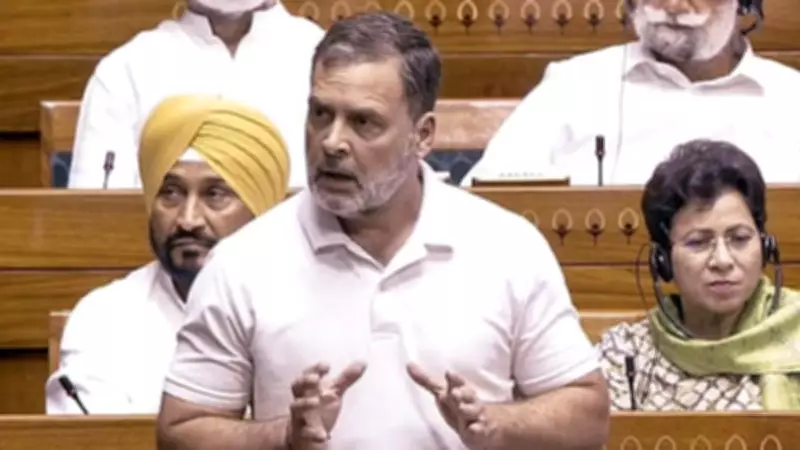
Rahul Gandhi Condemns BJP-RSS for 'Vanvasi' Term, Attacks Modi Government on US Trade Agreement
In a sharp critique, Congress leader Rahul Gandhi has launched a dual assault on the Bharatiya Janata Party (BJP) and its ideological mentor, the Rashtriya Swayamsevak Sangh (RSS), over their use of the term 'Vanvasi' to refer to tribal communities. Simultaneously, he has lambasted the Narendra Modi-led government for its handling of a trade deal with the United States, framing these issues as part of a broader pattern of marginalization and policy failures.
Targeting Tribal Terminology and Identity
Rahul Gandhi accused the BJP and RSS of deliberately employing the word 'Vanvasi' instead of 'Adivasi' or 'Tribal' to undermine the historical and cultural identity of indigenous groups in India. He argued that this linguistic shift is not merely semantic but a calculated move to erase the distinct heritage and rights of tribal populations, who have long been recognized as original inhabitants of the land.
"By calling them 'Vanvasi,' the BJP-RSS is attempting to strip tribals of their rightful place in Indian society," Gandhi stated, emphasizing that such terminology perpetuates a narrative that ignores their contributions and struggles.
Linking Caste Census Advocacy to Political Attacks
Further intensifying his criticism, Rahul Gandhi connected the backlash he faces from the BJP and RSS to his vocal support for a nationwide caste census. He claimed that whenever he speaks out on this issue, which aims to provide a clearer picture of social and economic disparities, he becomes a target for political vilification.
"The moment I raise the caste census, they attack me relentlessly," he remarked, suggesting that this opposition stems from a reluctance to address systemic inequalities that a census could expose.Scrutinizing the US Trade Deal Under Modi Government
Shifting focus to economic policies, Rahul Gandhi slammed the Modi administration for its approach to a trade agreement with the United States. He alleged that the deal, as negotiated, fails to protect the interests of Indian farmers, small businesses, and workers, potentially leading to adverse effects on the domestic economy.
- He pointed out concerns over market access and intellectual property rights that might disadvantage local industries.
- Gandhi also questioned the transparency of the negotiations, calling for greater public scrutiny and parliamentary oversight.
This critique adds to ongoing debates about India's trade strategies and their impact on various sectors.
Broader Implications and Political Context
The remarks by Rahul Gandhi come amid heightened political tensions, with the Lok Sabha and broader national discourse increasingly focused on issues of social justice and economic sovereignty. By highlighting the 'Vanvasi' term and the US trade deal, he aims to position the Congress party as a defender of marginalized communities and a critic of what he perceives as flawed governance.
- His statements reflect a strategic effort to rally support among tribal voters and those concerned with equitable development.
- They also underscore the deepening ideological divide between the Congress and the BJP-RSS combine on matters of identity and policy.
As these issues continue to unfold, they are likely to influence public opinion and shape political narratives in the lead-up to future elections.






