

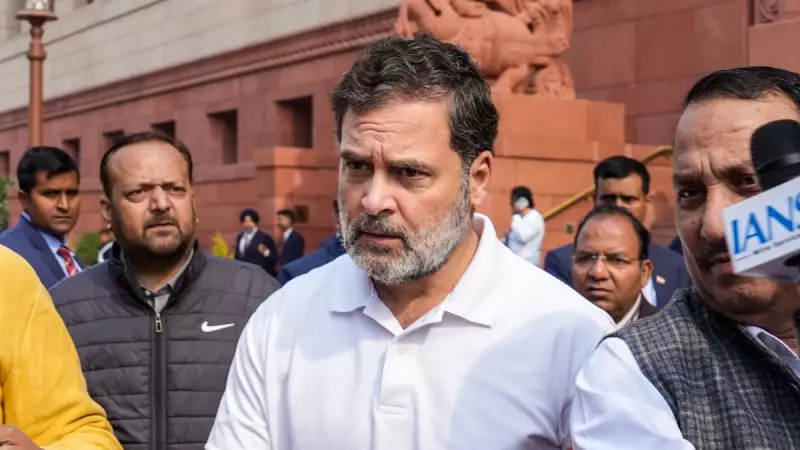
Congress leader Rahul Gandhi has launched a sharp critique of the central government's aviation policy, linking it directly to a recent high-profile incident involving IndiGo airlines. The opposition leader argues that what he calls the government's "monopoly model" is ultimately forcing ordinary Indian citizens to bear the brunt of systemic failures.
The Trigger: An IndiGo Incident and Political Reaction
The controversy stems from an event on December 5, 2025, involving India's largest carrier, IndiGo. While the original report details a specific onboard incident, Rahul Gandhi used it as a springboard to address broader concerns in the aviation sector. He did not mince words, directly holding the government's policy framework responsible for creating an environment where such fiascos can occur and where consumers have limited recourse.
Gandhi's core accusation is that the current administration has fostered a "monopoly model" in Indian aviation. This model, he contends, reduces healthy competition and allows dominant players to operate without sufficient accountability to the flying public. The recent event with IndiGo, in his view, is not an isolated mishap but a symptom of this larger structural problem.

Who Bears the Cost? The Argument Against the 'Monopoly Model'
The central theme of Gandhi's argument is the shifting of burden. He asserts that the financial and operational risks stemming from this concentrated market structure are ultimately passed on to "ordinary Indians." This translates to higher costs, compromised service quality, and less power for consumers when things go wrong. The common passenger, according to this critique, is the one "paying the price" for a policy that prioritizes corporate consolidation over consumer welfare and market diversity.
This criticism touches on long-standing debates about market concentration in India's aviation industry, which has seen several smaller airlines collapse or merge in recent years, leaving a handful of carriers, led by IndiGo, controlling a vast majority of the domestic market share.
Broader Implications for Governance and Public Policy
Rahul Gandhi's statement extends beyond aviation. By framing the issue as a "government's monopoly model," he positions it as a failure of governance and economic strategy. The implication is that similar patterns may exist in other sectors, where a lack of robust competition and regulatory oversight harms the end-user—the citizen.
The political timing is also significant, as such critiques are often amplified in the public sphere to question the ruling dispensation's management of key infrastructure and service industries. The use of a specific, relatable incident involving a major airline makes the complex policy argument more tangible for the average voter.
As of now, the government or the concerned ministries have not issued an official response to these specific allegations made by the Congress leader. The debate, however, highlights the ongoing tension between market dynamics, regulatory policy, and consumer rights in India's rapidly growing but often turbulent aviation sector.






