

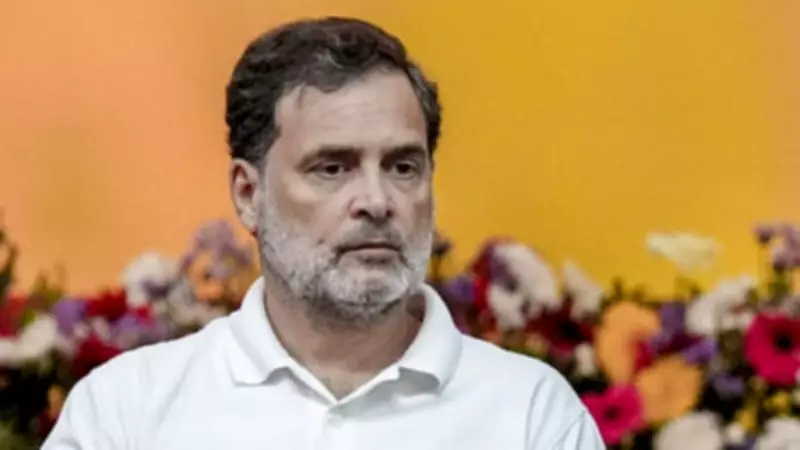
Leader of Opposition in the Lok Sabha, Rahul Gandhi, has submitted a dissent note on the selection of the new Central Bureau of Investigation (CBI) director, asserting that the post of Leader of Opposition is not a 'rubber stamp'. In his strongly worded dissent, Gandhi accused the Narendra Modi-led government of repeatedly misusing the country's premier investigative agency to target political opponents, journalists, and critics.
Rahul Gandhi's Dissent Note
According to sources, Rahul Gandhi submitted his formal dissent during the meeting of the high-powered committee convened to select the CBI chief. The committee comprises the Prime Minister, the Chief Justice of India or a Supreme Court judge nominated by him, and the Leader of Opposition. Gandhi's dissent note argued that the government has undermined the independence of the CBI, turning it into a tool for political vendetta.
“The Leader of Opposition is not a rubber stamp. My dissent is based on the consistent pattern of misuse of the CBI under the current regime,” Gandhi wrote in his note. He further stated that the selection process lacked transparency and that the government’s choice was not in line with the need to restore the agency's credibility.

Government's Alleged Misuse of CBI
In his dissent, Rahul Gandhi highlighted several instances where the CBI was allegedly used to harass opposition leaders, including the arrest of former Finance Minister P. Chidambaram in the INX Media case and the questioning of West Bengal Chief Minister Mamata Banerjee’s close aides in the Saradha scam. He also pointed to the agency's actions against journalists and activists, claiming that these cases were politically motivated.
“The CBI, which was once considered a symbol of integrity, has been reduced to a weapon in the hands of the ruling party. This must stop,” Gandhi wrote.
Reactions from Political Circles
The Congress party has rallied behind its leader, with party spokesperson Pawan Khera stating that Rahul Gandhi’s dissent note reflects the concerns of millions of Indians who believe in the rule of law. “The government cannot expect the opposition to be a silent spectator when institutions are being destroyed,” Khera said.
On the other hand, the Bharatiya Janata Party (BJP) dismissed Gandhi's allegations. BJP spokesperson Sambit Patra said, “Rahul Gandhi is frustrated because the CBI is now acting against corrupt politicians, including those from the Congress. His dissent is nothing but a political stunt.”
Background of the CBI Chief Selection
The selection of the CBI director is governed by the Delhi Special Police Establishment (DSPE) Act, 1946. The high-powered committee, chaired by the Prime Minister, includes the Chief Justice of India or a Supreme Court judge and the Leader of Opposition. The committee’s mandate is to recommend a name for the post, which is then appointed by the government.
In recent years, the selection process has often been contentious, with opposition leaders alleging that the government has been pushing its own candidates. The current controversy is the latest in a series of disagreements over the appointment of the CBI chief.
Impact on CBI's Credibility
Legal experts believe that such dissent notes, while not legally binding, put pressure on the government to ensure a fair selection process. Former Supreme Court judge Justice B.P. Singh said, “The dissent of the Leader of Opposition is a significant development. It indicates that the selection process is not unanimous, which could affect the credibility of the appointee.”
The CBI has been under scrutiny in recent years, with several high-profile cases being transferred to other agencies or facing delays. The agency’s reputation took a hit after the infamous ‘coup’ in 2018, when then-Director Alok Verma was sent on leave following allegations of corruption.
As the government proceeds with the appointment, the dissent note by Rahul Gandhi is expected to fuel further debate on the independence of investigative agencies in India.






