

Congress Leader Rahul Gandhi Levels Serious Allegations Against Modi Government Over US Trade Deal
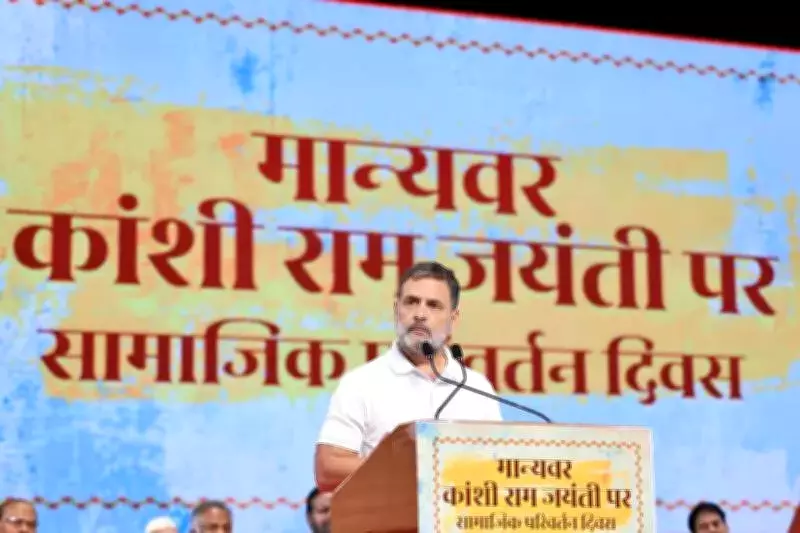
In a significant political development, Congress Member of Parliament and Leader of the Opposition in the Lok Sabha, Rahul Gandhi, launched a scathing attack on Prime Minister Narendra Modi's administration. Speaking at the Samvidhan Sammelan in Lucknow on Friday, Gandhi accused the Prime Minister of fundamentally compromising India's strategic interests through recent trade agreements with the United States.
Triple Threat to National Security
Gandhi articulated a three-pronged critique, asserting that the government has endangered India's economic, digital, and energy security. He described the terms of the trade deal as "unfair" and claimed they represent a surrender of India's sovereign decision-making authority to Washington.
"The Prime Minister has compromised India's economic, digital, and energy security in the trade deal with the United States," Gandhi stated unequivocally to Congress workers gathered at the event.

Data Sovereignty Concerns Raised
One of the most serious allegations centered on data protection. Gandhi claimed that India has effectively surrendered control over its citizens' data.
"The PM handed over all the data of the people of India to the American government and companies, permitting them to store it anywhere and granting a 20-year tax holiday," he alleged. "This change left India unable to monitor or regulate how the data of its citizens is used."
This arrangement, according to Gandhi, represents a significant loss of strategic leverage and raises profound questions about privacy and national security.
Energy Policy Under Fire
The Congress leader also raised alarming concerns about India's energy independence. He alleged that the government has ceded authority over critical energy decisions to the United States.
"India had agreed to follow US instructions on whether to buy oil and gas from countries like Russia, Iran, or Iraq," Gandhi claimed. He pointed to the recent closure of the Strait of Hormuz as evidence of how this policy shift threatens India's energy stability, suggesting that India's hands are now tied in responding to such geopolitical developments.
Economic Impact on Indian Businesses
Gandhi further criticized what he described as economically damaging provisions in the trade agreement. He highlighted a commitment to purchase goods worth Rs 9 lakh crore annually from the United States.
"This move will severely harm Indian businesses," he warned, specifically mentioning agricultural imports that could devastate small farmers.
- Cotton
- Soybeans
- Pulses
- Fruits and nuts
Gandhi argued that imports from large, mechanized American farms would undercut the livelihoods of small Indian farmers operating on just two to five acres of land, creating an uneven playing field that favors foreign producers.
Allegations of One-Sided Concessions
According to the Congress leader, India has received nothing substantial in return for these concessions. He asserted that taxes have increased while domestic producers have been left vulnerable to foreign competition.
In his most pointed criticism, Gandhi alleged that the prime minister was "compromised and has surrendered," referencing unspecified financial and international controversies that he claimed have weakened India's negotiating position on the global stage.
The remarks at the Samvidhan Sammelan represent a significant escalation in the opposition's criticism of the government's foreign economic policy, framing trade agreements as matters of national security rather than mere commercial arrangements.






