

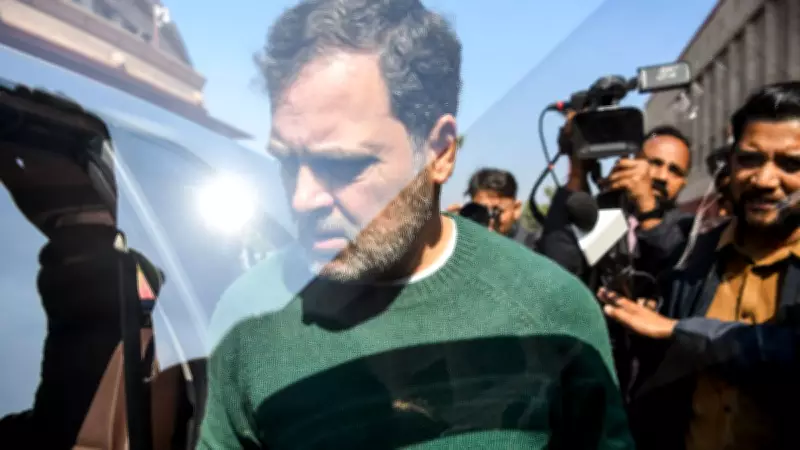
Rahul Gandhi Alleges PM Modi Is Fearing Parliament Over His Statements
In a bold political assertion, Congress leader Rahul Gandhi has accused Prime Minister Narendra Modi of being "scared to come to Parliament" because of the remarks he is making. This statement, made on February 9, 2026, has intensified the ongoing political discourse in India, highlighting the deep-seated tensions between the ruling Bharatiya Janata Party (BJP) and the opposition Congress party.
Escalating Political Confrontation
Rahul Gandhi's comments come at a critical juncture as India gears up for the 2026 general elections. He suggested that the Prime Minister's absence from parliamentary sessions is a direct response to his vocal criticisms and allegations. "The Prime Minister is running away from Parliament because he cannot face the truth I am speaking," Gandhi stated, without providing specific details on the nature of his statements that he believes are causing this avoidance.
This accusation adds fuel to the fire in a political landscape already marked by heated debates and confrontations. Analysts note that such claims are part of a broader strategy by the Congress to challenge the BJP's governance and policies ahead of the elections.

Context and Implications
The Parliament of India has been a battleground for political ideologies, with sessions often witnessing sharp exchanges between government and opposition members. Rahul Gandhi's allegation implies that PM Modi is shying away from direct engagement in this forum, potentially undermining democratic accountability.
- Political Strategy: Gandhi's remarks are seen as an attempt to portray the Prime Minister as evasive and unresponsive to opposition scrutiny.
- Public Perception: Such statements aim to influence voter sentiment by questioning the leadership's transparency and willingness to engage in parliamentary democracy.
- Historical Precedents: Similar accusations have been made in the past, but the timing ahead of elections makes this particularly significant.
Response and Reactions
As of now, there has been no official response from Prime Minister Narendra Modi or the BJP regarding Rahul Gandhi's claims. However, political observers anticipate that this will spark a series of counter-accusations and debates in the coming days. The BJP has historically defended PM Modi's parliamentary attendance and engagement, often citing his busy schedule and governance priorities.
The Congress party, on the other hand, is likely to use this as a rallying point to mobilize support and critique the government's performance. This incident underscores the intense rivalry that defines Indian politics, with both sides leveraging every opportunity to gain an upper hand.
Looking Ahead to 2026 Elections
With the 2026 elections on the horizon, statements like these are expected to become more frequent and charged. Rahul Gandhi's accusation not only targets PM Modi personally but also raises broader questions about parliamentary decorum and the role of opposition in a democracy.
- Election Campaigns: Such allegations may shape campaign narratives, focusing on leadership accountability and transparency.
- Policy Debates: It could shift attention from substantive policy issues to personal political attacks, affecting the quality of electoral discourse.
- Democratic Health: The exchange highlights the need for robust parliamentary participation to ensure checks and balances in governance.
In conclusion, Rahul Gandhi's claim that PM Modi is avoiding Parliament due to his remarks marks a significant escalation in political tensions. As India moves closer to the 2026 elections, such confrontations are set to dominate the news cycle, influencing public opinion and the democratic process. The coming months will reveal how this narrative unfolds and impacts the political landscape.






