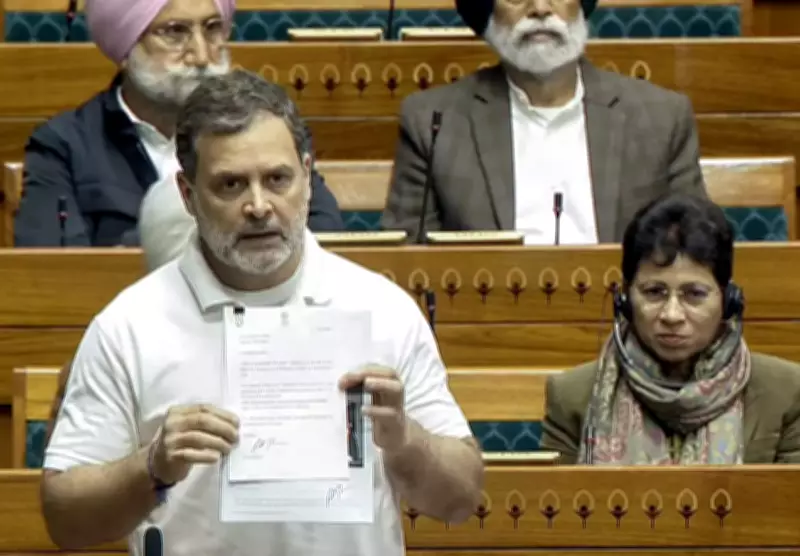
Rahul Gandhi Writes Strong Protest Letter to Lok Sabha Speaker Om Birla
Leader of Opposition in the Lok Sabha Rahul Gandhi has formally registered his strongest protest against Speaker Om Birla for not allowing him to speak during the discussion on the President's address. In a sharply worded letter written on Tuesday, the Congress MP from Raebareli described the Speaker's actions as a blot on our democracy, escalating the ongoing parliamentary confrontation.
The Controversy Over Unpublished Book Reference
The controversy stems from Monday's proceedings when treasury benches objected to Gandhi quoting from former Army Chief General MM Naravane's unpublished book about the India-China clashes in Ladakh in June 2020. Government members argued that parliamentary rules prohibit citing unpublished materials, creating a heated exchange that continued into Tuesday's session.
General Naravane, who served as Army Chief during the 2020 border tensions, has written about the incidents in his forthcoming book. Gandhi attempted to reference this material during his allotted time to speak on the President's address, leading to the parliamentary standoff that has now resulted in formal written protest.

Gandhi's Constitutional Argument in Detailed Letter
In his comprehensive letter to Speaker Birla, Gandhi outlined what he called long-standing parliamentary conventions that he believes were violated. By established practice, when a member wishes to reference any document in the House, they must authenticate it and take responsibility for its contents, Gandhi wrote, emphasizing that once this requirement is met, the Speaker traditionally permits the reference.
The Congress leader elaborated that after such authentication, it becomes the government's responsibility to respond to the content, while the Speaker's role concludes. Gandhi argued that preventing him from speaking represents not just a breach of this convention but reflects what he termed a deliberate attempt to silence the Leader of Opposition during crucial parliamentary discussions.
Unprecedented Situation in Parliamentary History
The Raebareli MP made a significant historical claim in his protest, stating that for the first time in parliamentary history, the Speaker has been compelled by the government to prevent the Leader of Opposition from speaking on the President's address. He characterized this development as creating an unprecedented situation that threatens democratic norms.
Gandhi emphasized that the right of the Leader of Opposition and every member to speak forms an integral foundation of our democracy. The denial of these fundamental democratic rights, according to his letter, represents a dangerous precedent that requires immediate correction and accountability.
Allegations of Government Fear and Continued Attempts
Beyond procedural arguments, Gandhi made a substantive allegation that the government appears scared of what General Naravane's book contains about the Ladakh border clashes. This suggestion adds another layer to the political dimensions of the parliamentary confrontation.
The Congress leader made further attempts to speak on the issue during Tuesday's session but was again unsuccessful in securing the floor. This persistence indicates the issue remains unresolved and continues to generate tension between the opposition and treasury benches in the Lok Sabha.
The ongoing dispute highlights broader questions about parliamentary procedures, opposition rights, and the balance between government control and democratic discourse in India's legislative processes. As both sides maintain their positions, the resolution of this conflict may establish important precedents for future parliamentary conduct and opposition participation in crucial national discussions.