

Rahul Gandhi Slams PM Modi Over Silence on Killing of Indian Sailors
NEW DELHI: Congress leader and Leader of Opposition in Lok Sabha Rahul Gandhi on Friday launched a scathing attack on Prime Minister Narendra Modi for his silence on the killing of three Indian sailors in a US Navy attack. Gandhi accused Modi of being a “compromised PM” who is unable to protect the “sons of Mother India.”
“Three Indians have been killed in US attacks on three ships in international waters within three days. And our Compromised PM? Not a single word. When any foreign power murders an Indian, the Prime Minister has to speak up. But heaven forbid he should utter even one word,” Gandhi wrote on X.
He further criticized Modi’s upcoming participation at the G7 summit, saying, “Next week at the G7, just days after the murder of our sailors, Modi ji will smile, embrace, and sign agreements - but for those three Indians, he won't have a word to spare. A Compromised PM cannot protect the sons of Mother India, because he lacks either the courage or the strength to confront those who took the lives of those sons.”

Background of the Incident
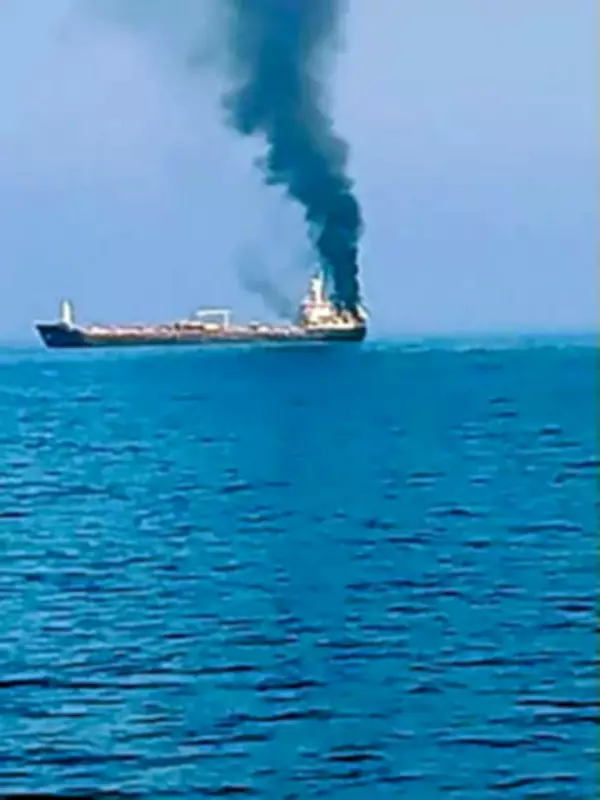
The United States Navy has attacked three merchant vessels carrying Indian crew members in the past four days in the Gulf of Oman. The ships were allegedly attempting to breach the US naval blockade of Iran. The Palau-flagged oil tankers Marivex and Settebello were struck on June 8 and June 10, respectively, while the Guinea-Bissau-flagged bitumen tanker MT Jalveer was attacked on Thursday.
The three sailors killed were part of the crew of MT Settebello. They have been identified as Aditya Sharma, Suresh Patnala, and Shivanand Chaurasiya.
Geopolitical Context
Washington imposed a naval blockade of Iran in response to Tehran's effective closure of the Strait of Hormuz, a critical maritime route through which approximately 20% of the world's crude oil supply passes. Iran blocked the Strait of Hormuz in early March following US and Israeli strikes across the Islamic Republic on February 28, an escalation that sparked the broader regional conflict.
Active hostilities were paused on April 8 under a ceasefire arrangement, which was subsequently extended indefinitely. However, the truce has remained largely ineffective, as attacks have continued despite the pause in fighting.






