

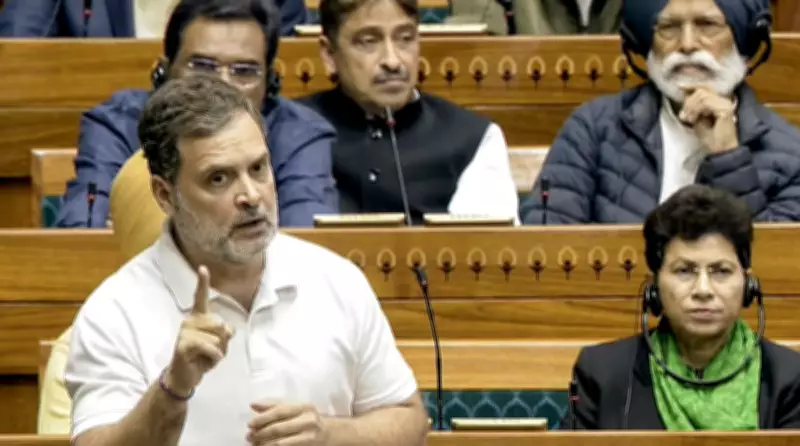
Rahul Gandhi Questions Prime Minister's Leadership and US Deal
In a recent address, Congress leader Rahul Gandhi has strongly criticized the government's approach to a key US-India agreement, while championing the causes of workers and farmers across the nation. His remarks have sparked a fresh debate on economic policies and leadership accountability in India.
Criticism of the US-India Deal
Rahul Gandhi expressed deep concerns over the terms of the US-India deal, suggesting that it may not align with the best interests of the Indian populace. He argued that such agreements often prioritize corporate and international interests over domestic welfare, potentially undermining local industries and agricultural sectors.
Key Points of Contention:- The deal's impact on small-scale farmers and their livelihoods.
- Potential job losses for workers in affected industries.
- Lack of transparency in negotiations and public consultation.
Advocacy for Workers and Farmers
Gandhi emphasized the need for policies that protect and empower workers and farmers, who form the backbone of India's economy. He called for increased support mechanisms, fair wages, and better market access to ensure their prosperity.

Questioning the Prime Minister's Responsiveness
A central theme of Gandhi's speech was questioning whether the Prime Minister is willing to listen to public concerns or if external influences hold too strong a grip on decision-making. He implied that leadership should be more attuned to domestic issues rather than international pressures.
- Is the Prime Minister accessible to the voices of ordinary citizens?
- Are economic policies being shaped by external entities?
- What steps are being taken to address the grievances of workers and farmers?
This critique adds to ongoing political discourse, with Gandhi positioning himself as a vocal advocate for marginalized groups, urging the government to reconsider its priorities and engage more deeply with public sentiment.






