

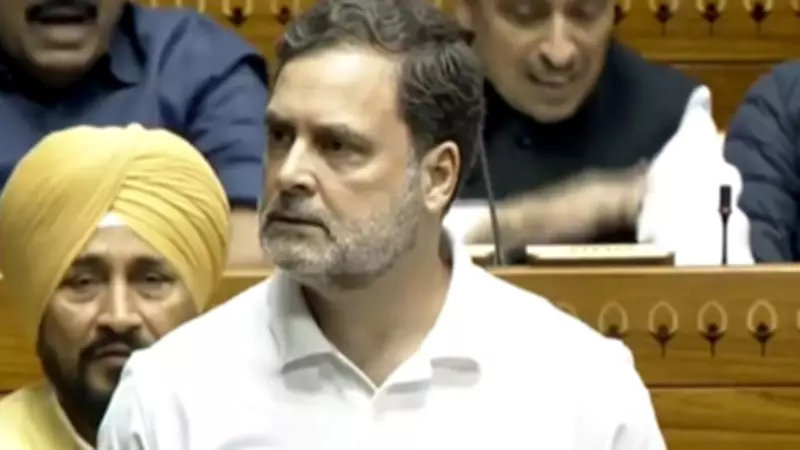
Rahul Gandhi Voices Support for Nationwide Workers and Farmers Strike
Congress leader Rahul Gandhi has publicly endorsed the nationwide protests organized by workers and farmers demanding protection of their fundamental rights. On Thursday, Gandhi raised significant concerns regarding recent labour reforms, international trade policies, and potential modifications to the Mahatma Gandhi National Rural Employment Guarantee Act (MGNREGA).
Concerns Over Labour Codes and Rural Employment
In a detailed post on social media platform X, Gandhi articulated the anxieties of the protesting groups. "Workers fear that the implementation of the four labour codes will substantially weaken their existing rights and protections," he stated. "Farmers are deeply apprehensive that new trade agreements could severely harm their livelihoods and economic stability."
Gandhi emphasized the critical importance of MGNREGA, warning that "any weakening or scrapping of this program could effectively snatch away the last lifeline available to countless rural villages across India." He criticized the decision-making process, noting that "when policies affecting their future were formulated and implemented, their voices were systematically ignored."

Political Challenge and Solidarity
The Congress leader directly challenged Prime Minister Narendra Modi, asking "Will Modiji listen now to these legitimate concerns? Or is the political 'grip' on him too strong to acknowledge these pressing issues?" Gandhi firmly declared his position, stating "I stand unequivocally with the workers and farmers on their genuine issues and their ongoing struggle for justice."
Nationwide Strike Details and Demands
The nationwide general strike, called by ten Central Trade Unions (CTUs) and supported by the Samyukta Kisan Morcha (SKM), represents a coordinated effort to oppose multiple government policies. The protest specifically targets:
- The implementation of four new labour codes
- Privatization and contractualization measures across sectors
- The proposed Electricity Amendment Bill 2025
- Potential changes to MGNREGA structure and funding
- The proposed Seed Bill affecting agricultural practices
Organizers anticipate large-scale participation from farmers, agricultural workers, industrial unions, power sector employees, PRTC staff, and various worker organizations at protest sites throughout the country.
Specific Demands and Additional Support
In an official statement, the SKM outlined the strike's primary objectives, which include:
- Complete withdrawal of the four labour codes
- Rejection of the Electricity Bill 2025 and Seed Bill 2025
- Opposition to the VB-G RAM G Act 2025
- Restoration of the old pension scheme for workers
- Implementation of minimum wages for all workers, including scheme workers
Communist Party of India (CPI) leader and All India Trade Union Congress (AITUC) working president Binoy Viswam expressed full solidarity with the nationwide farmers' strike, describing it as "a crucial movement to defend people's basic constitutional rights and economic security."
Regional Participation and Economic Concerns
Apple farmers in Himachal Pradesh have intensified preparations to join the nationwide farmers' strike scheduled for February 12. They have announced plans for a significant march to Delhi, expressing specific concerns about recent import duty reductions under India-US and other free trade agreements.
These agricultural producers warn that cheaper apple imports could severely impact the state's apple-based economy, despite repeated assurances from Union Commerce and Industry Minister Piyush Goyal that the interests of Indian apple farmers would be adequately safeguarded through policy measures.

Diverging Perspectives on the Protest
While numerous trade unions and farmer organizations have committed to participating in the nationwide strike, the National Front of Indian Trade Unions (NFITU) has declared it will not join the protest. NFITU representatives have characterized the strike as "politically motivated" rather than representing genuine worker concerns, highlighting differing perspectives within the labor movement regarding the appropriate response to current government policies.





