

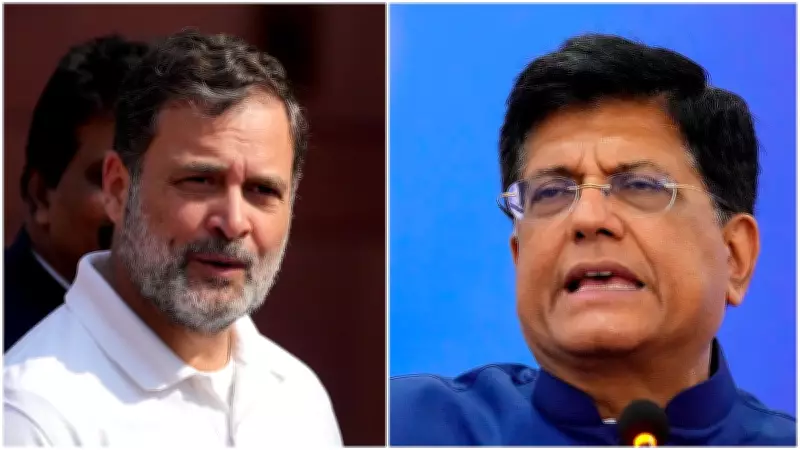
Rahul Gandhi Accuses Modi Government of Cheating Cotton Farmers, Piyush Goyal Retorts with 'Immature' Label
In a sharp political confrontation, Congress leader Rahul Gandhi has launched a scathing attack on the Narendra Modi-led government, accusing it of systematically cheating cotton farmers across India. The allegations center on unfulfilled promises and policy failures that Gandhi claims have left farmers in distress, particularly in key agricultural states.
Gandhi's Allegations of Farmer Exploitation
Rahul Gandhi, in a public statement, asserted that the Modi administration has betrayed the trust of cotton cultivators by not implementing assured support mechanisms. He highlighted issues such as inadequate minimum support prices (MSP), delays in procurement, and a lack of financial relief during crop failures. Gandhi emphasized that these actions have exacerbated the economic hardships faced by farmers, who are already grappling with rising input costs and climate-related challenges.
"The government's policies are designed to benefit corporate interests at the expense of our farmers," Gandhi declared, urging immediate corrective measures to address the grievances of the agricultural community.

Piyush Goyal's Counterattack and Dismissal
Responding swiftly, Union Minister Piyush Goyal dismissed Rahul Gandhi's accusations as "immature and baseless." Goyal, who holds the commerce and industry portfolio, defended the government's record, citing initiatives like the PM-KISAN scheme and increased MSP for cotton as evidence of its pro-farmer stance.
"These claims are politically motivated and show a lack of understanding of the government's efforts to uplift farmers," Goyal stated. He accused Gandhi of spreading misinformation to gain political mileage, rather than engaging in constructive dialogue.
Broader Political Implications
This exchange underscores the ongoing tensions between the Congress party and the ruling BJP over agricultural policies, a critical issue in Indian politics. Key points of contention include:
- The implementation and effectiveness of farmer welfare schemes.
- Disputes over procurement processes and price stabilization.
- The role of government intervention in mitigating agricultural crises.
As the debate intensifies, it is likely to influence public perception ahead of upcoming elections, with both sides vying to position themselves as champions of the farming community. The outcome could have significant ramifications for rural vote banks and policy directions in the agricultural sector.






