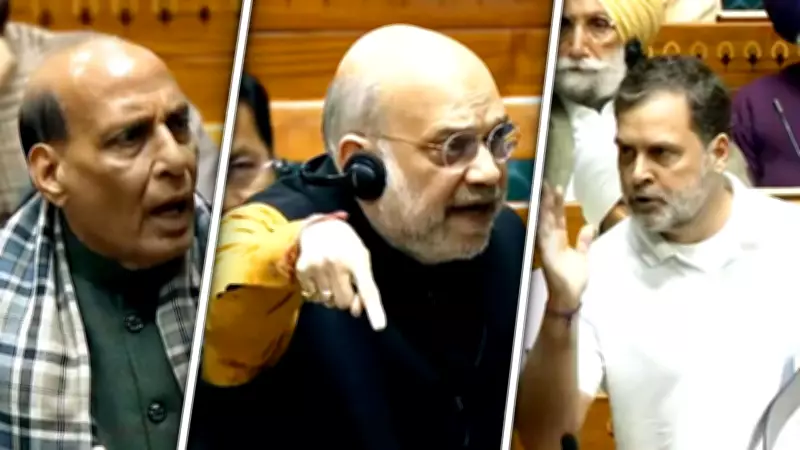
A fiery confrontation erupted in the Lok Sabha on Monday, as Congress leader Rahul Gandhi clashed with senior BJP ministers Rajnath Singh and Amit Shah over contentious claims regarding the Doklam and Ladakh military stand-offs. The parliamentary session, which was focused on national security matters, quickly descended into chaos following Gandhi's attempt to reference an unpublished memoir by former Indian Army Chief General M M Naravane.
Unpublished Memoir Sparks Parliamentary Uproar
Rahul Gandhi, while participating in the debate, cited a magazine essay that referenced General Naravane's forthcoming memoir. The Congress leader specifically mentioned details about Chinese military movements during the Doklam and Ladakh border tensions, which immediately drew sharp objections from the treasury benches.
Defence Minister Rajnath Singh rose to protest what he called a violation of parliamentary decorum. "Quoting from an unpublished book that hasn't been verified goes against established House rules," Singh asserted. He warned that such practices could potentially open the floodgates to misinformation and compromise sensitive national security discussions.

Government's Strong Objections
Home Minister Amit Shah joined the Defence Minister in opposing Gandhi's references, particularly when the Congress leader mentioned "Chinese tanks" in his remarks. The BJP leaders argued vehemently that discussing unverified material from an unpublished source set a dangerous precedent for parliamentary proceedings.
Parliamentary Affairs Minister Kiren Rijiju took the objections a step further by questioning whether disciplinary action should be considered for defying the Speaker's rulings. "When members deliberately cite unpublished materials against the Speaker's directions, it undermines the sanctity of this House," Rijiju stated during the heated exchange.
Rahul Gandhi's Counter-Arguments
Unfazed by the government's objections, Rahul Gandhi pressed his case with pointed questions. "What exactly in this book is scaring the government so much?" he demanded. The Congress leader insisted that the material he was referencing was genuine and represented important perspectives on recent border tensions that deserved parliamentary attention.
Gandhi maintained that the public had a right to know about significant events involving national security, especially when they came from credible sources like a former Army chief. His persistence in continuing with the references despite repeated interruptions led to escalating tensions between the opposition and ruling party members.
Speaker Intervenes as Chaos Ensues
As the arguments grew more heated and members from both sides raised their voices, Speaker Om Birla attempted to restore order. However, with BJP leaders continuing to object to every mention of the Doklam and Ladakh references, and Congress members supporting Gandhi's right to raise the issue, the situation became increasingly unmanageable.
The Speaker eventually had no choice but to adjourn the proceedings temporarily, highlighting the intensity of the political clash. This parliamentary disruption underscored the deep fault lines that exist between political parties when it comes to discussing and interpreting national security narratives.
Broader Implications for National Security Discourse
The incident reveals several important aspects of India's political landscape:
- The sensitivity surrounding discussions of border tensions with China remains extremely high in parliamentary forums
- There are clear disagreements about what constitutes appropriate sources for national security debates
- The episode demonstrates how quickly national security discussions can become politicized in the current environment
- It raises questions about balancing transparency with security considerations in democratic institutions
The adjournment of proceedings served as a stark reminder of how national security issues continue to be among the most divisive topics in Indian politics. With General Naravane's memoir yet to be published officially, this parliamentary clash may only be the beginning of a broader debate about India's recent border challenges and how they should be discussed in public forums.