

From Rahul Gandhi's Close Aide to 'Traitor Friend': The Political Journey of MoS Ravneet Bittu
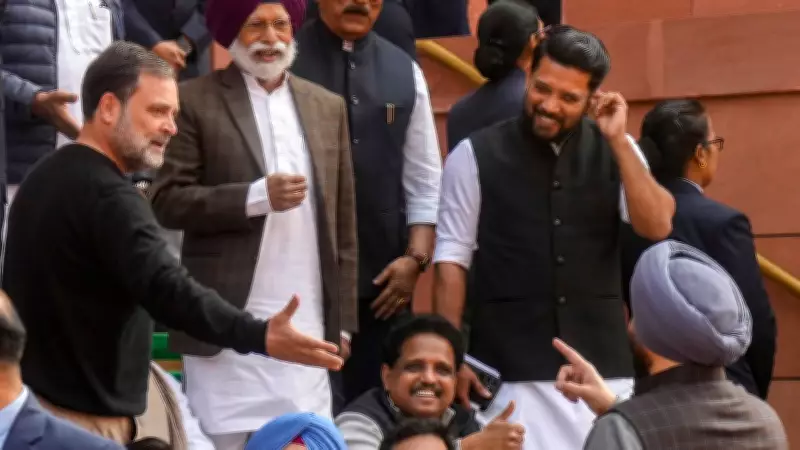
The political landscape in India witnessed a dramatic confrontation on Wednesday, as Leader of the Opposition Rahul Gandhi and Union Minister of State Ravneet Singh Bittu exchanged sharp words outside Parliament. This incident has reignited the ongoing Congress-BJP rivalry, highlighting the complex dynamics between former allies turned opponents.
A Heated Exchange at Parliament
During a protest by Congress MPs at the Makar Dwar of Parliament, Ravneet Bittu walked past the demonstrators. Rahul Gandhi, leading the protest and dressed in black to symbolize dissent over not being allowed to speak in the House, was among them. As the protesting MPs flashed thumbs-up signs, Bittu remarked, "Yeh jung jeet ke aaye hain" (It is as if they have returned after winning a war). In a swift retort, Gandhi pointed at Bittu and said, "Hello, brother! My traitor friend. Don't worry, you will come back (to the Congress)." This exchange underscores the deep personal and political rift between the two figures.
Bittu's Political Shift and Career
Ravneet Bittu, 51, made a significant move by switching from the Congress to the BJP ahead of the 2024 Lok Sabha elections. Although he lost the election from the Ludhiana constituency, the BJP rewarded his loyalty by electing him as a Rajya Sabha MP and appointing him as a Minister of State in Narendra Modi's Cabinet 3.0. His political journey began in 2009 when he was first elected to the Lok Sabha from Anandpur Sahib as a Congress candidate, followed by victories from Ludhiana in 2014 and 2019.

In the 2024 polls, Bittu faced defeat against Punjab Congress chief Amrinder Singh Raja Warring by over 20,000 votes. His campaign was marked by a strong performance in urban segments but a rout in rural areas, largely due to farmers' protests against the BJP. This loss highlights the challenges he faces in his home state.
Legacy and Personal Background
Bittu comes from a prominent political family, being the grandson of former Punjab Chief Minister Beant Singh, who was assassinated by pro-Khalistan militants in 1995. This tragic event has shaped his stance as a vocal critic of radical elements, from whom he has received threats. His entry into politics was facilitated by a meeting with Rahul Gandhi in 2007, who encouraged him to join active politics and honor his grandfather's legacy. Before this, Bittu ran a small cement production unit.
Seen as a close aide of Gandhi during his time in the Congress, Bittu was appointed chief of the Punjab Youth Congress in 2008. However, his shift to the BJP has divided his family politically, with his paternal uncle and cousin remaining in the Congress and campaigning against him in the 2024 elections.
Controversies and Campaign Challenges
Bittu's political career has not been without controversy. During the 2024 campaign, he faced criticism for using images of his grandfather, Beant Singh, on BJP posters, which the Congress deemed inappropriate. Additionally, he was served a notice by the Ludhiana civic body for illegally occupying a government house for eight years, forcing him to vacate and pay a penalty of Rs 1.82 crore before filing his nomination.
His campaign also saw viral videos of him fleeing from villages after facing farmers' anger and making statements warning protesters about the election results. These incidents have added to the scrutiny of his political maneuvers.
Conclusion
The exchange between Rahul Gandhi and Ravneet Bittu is more than just a political spat; it reflects the broader tensions within Indian politics, especially in Punjab. Bittu's journey from a Congress loyalist to a BJP minister, coupled with his family legacy and personal challenges, makes him a key figure in understanding the evolving dynamics of party alliances and rivalries. As the political landscape continues to shift, his story serves as a testament to the complexities of loyalty, legacy, and ambition in modern Indian democracy.






