

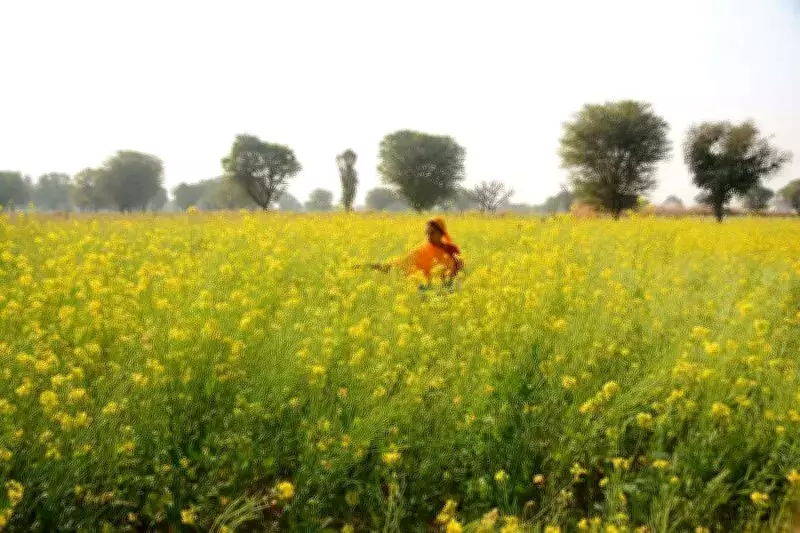
Rajasthan Farmers Voice Discontent Over Union Budget 2026-27 Priorities
Agricultural leaders and farmer organizations across Rajasthan have expressed significant disappointment with the recently announced Union Budget for the fiscal year 2026-27. Their primary criticism centers on the document's failure to address two crucial demands: any increase in the minimum support price (MSP) for crops and the establishment of a legal guarantee for government procurement at MSP rates.
Budget Allocations and Rural Realities
Rampal Jat, the national president of the Kisan Mahapanchayat, articulated that the budget appears disproportionately focused on corporate capital expansion rather than farmer welfare. "The budget does not resonate with the realities of rural India," Jat stated. He further criticized what he perceives as misleading references to high-value crops like cashew, almonds, coffee, and cocoa, which he argues do not reflect the actual agricultural landscape for most farmers.
Highlighting specific budgetary figures, Jat pointed out that out of the total outlay of Rs 53.47 lakh crore, a mere Rs 2.84 lakh crore—constituting only 5.31%—was allocated to agriculture and allied sectors. This allocation stands in stark contrast to the nearly 75% of India's population that depends on these sectors for livelihood.

Economic Stimulus Through Farmer Empowerment
Jat emphasized that achieving demand-driven economic growth is impossible without enhancing the purchasing power of consumers, particularly farmers. He drew a parallel to the government's rationale during the implementation of the Seventh Pay Commission, where increasing the income of government employees was justified as a means to boost economic activity. "If raising the income of 5% of the population can stimulate the economy, why can't increasing the income of 75%?" he questioned, underscoring the potential economic impact of empowering the agricultural community.
Regional Concerns and Crop-Specific Criticisms
Subash Sehgal, a farmer leader from Sriganganagar, echoed these sentiments with a regional perspective. He questioned the practicality of promoting crops like cashews in areas such as Sriganganagar or Kota, where the soil is naturally suited for wheat and soya bean cultivation. "Everyone eats wheat every day, yet no one is willing to ensure fair prices for it. Cashews sound good in speeches, but stomachs are filled with wheat," Sehgal remarked, highlighting the disconnect between policy rhetoric and ground-level agricultural practices.
Climate Vulnerabilities and Insurance Demands
The budget also faced criticism for overlooking the pressing issue of crop losses due to extreme weather events. Suraj Chaudhary, a farmer from Sultana village in Jhunjhunu, expressed disappointment over the absence of any announcement regarding crop insurance. He shared his personal experience, noting that his fields were devastated within minutes by rain and hailstorms. "Our fields were wiped out in minutes by rain and hailstorms, but that pain did not even find a mention in the Budget speech," Chaudhary lamented, calling for greater recognition and support for farmers facing climate-induced adversities.
Overall, the collective feedback from Rajasthan's farming community paints a picture of a budget perceived as inadequate in addressing their core concerns, from fair pricing mechanisms and legal safeguards to climate resilience and sectoral allocation priorities.






