

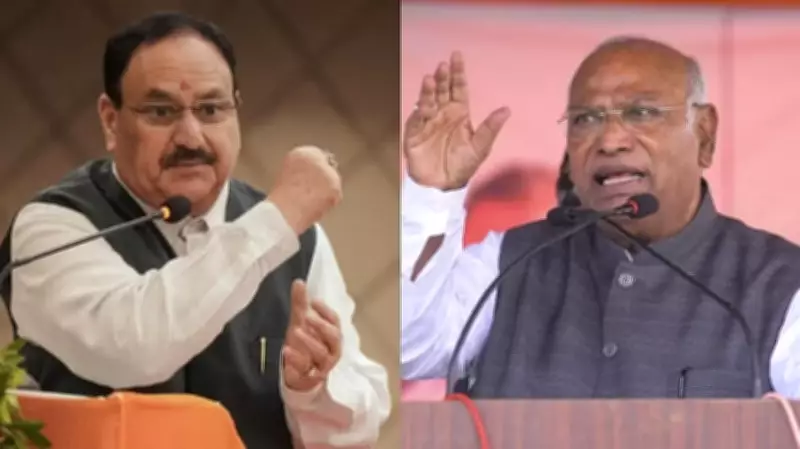
The Upper House of Parliament, the Rajya Sabha, witnessed a fiery and intense exchange of words on Wednesday, as two prominent political leaders engaged in a verbal duel that captured the attention of the nation. The confrontation unfolded between Mallikarjun Kharge, the Leader of the Opposition, and JP Nadda, the President of the ruling Bharatiya Janata Party (BJP), highlighting the deep-seated political tensions currently simmering in Indian politics.
A Clash of Words: 'Khujli' Versus 'Hostage of Innocent Child'
The heated debate erupted when Mallikarjun Kharge used the term 'khujli' in his remarks, a Hindi word that translates to 'itch' or 'irritation', often implying a sense of restlessness or discomfort. In response, JP Nadda countered sharply by referring to the situation as a 'hostage of an innocent child', a phrase laden with emotional and political connotations, suggesting exploitation or manipulation of vulnerable issues for political gain.
Chairman's Intervention to Uphold Parliamentary Decorum
Amidst the escalating war of words, the Chairman of the Rajya Sabha, CP Radhakrishnan, stepped in to restore order and maintain the dignity of the House. He firmly advised Mallikarjun Kharge to refrain from raising issues specifically related to the Lok Sabha, the Lower House of Parliament, in the Rajya Sabha. This intervention was based on a previous ruling that delineates the jurisdictional boundaries between the two Houses, ensuring that discussions remain focused and relevant to the Upper House's purview.

CP Radhakrishnan's directive underscored the importance of adhering to parliamentary procedures and protocols, even in the heat of political debate. His actions aimed to prevent the discussion from devolving into a broader, unstructured argument that could detract from the substantive issues at hand.
Broader Implications for Indian Parliamentary Discourse
This incident is not merely an isolated spat but reflects the broader dynamics of India's political landscape, where verbal skirmishes often mirror deeper ideological divides. The exchange between Kharge and Nadda highlights how language and rhetoric are wielded as tools in political battles, with each side seeking to frame narratives in ways that resonate with their constituencies.
Such episodes also raise questions about the tone and tenor of parliamentary debates in India. While robust discussion is a hallmark of a vibrant democracy, maintaining civility and respect is crucial for productive governance. The Chairman's intervention serves as a reminder of the need to balance passionate advocacy with procedural propriety.
As the political climate in India continues to be charged with debates over policy, governance, and national direction, incidents like this underscore the challenges and complexities of parliamentary democracy. They remind citizens and lawmakers alike of the delicate balance between expressing dissent and upholding the institutional integrity of Parliament.






