

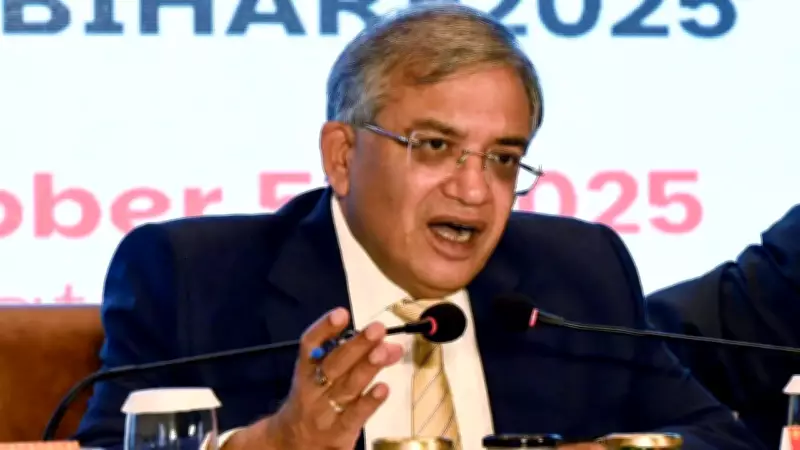
Rajya Sabha Chairman Rejects Opposition's Impeachment Motion Against CEC Gyanesh Kumar
In a significant parliamentary development, Rajya Sabha Chairman CP Radhakrishnan on Monday rejected the opposition's impeachment motion against Chief Election Commissioner Gyanesh Kumar. This marks the first instance in Indian parliamentary history where a notice seeking the removal of the Election Commission chief was issued with the signatures of 130 Lok Sabha MPs and 63 Rajya Sabha members, totaling 193 parliamentarians.
Details of the Impeachment Motion
The comprehensive 10-page impeachment motion leveled seven specific charges against CEC Gyanesh Kumar. These allegations ranged from accusations of partisan conduct in his role as Chief Election Commissioner to claims of mass disenfranchisement of voters across multiple states. The motion emerged against the backdrop of ongoing controversies surrounding the pan-India electoral roll purification initiative known as the Special Intensive Revision (SIR).
The opposition's notice detailed multiple concerns regarding Kumar's handling of electoral processes. These included his management of SIR during previous elections in Bihar and upcoming elections in states like West Bengal, allegations of "proved misbehaviour," and accusations of partial conduct favoring a particular political party. The Trinamool Congress (TMC) spearheaded the removal notice following escalating accusations from opposition parties against the Election Commission chief.

Opposition Allegations and Political Context
Opposition parties have consistently accused CEC Gyanesh Kumar of displaying bias and implementing the ongoing Special Intensive Revision exercise in what they describe as an arbitrary manner designed to benefit the ruling BJP. West Bengal Chief Minister Mamata Banerjee has been at the forefront of protests against the SIR process in her state, while other opposition parties have joined the criticism. Congress leader Rahul Gandhi has been steering the "vote chori" (vote theft) campaign, amplifying the opposition's concerns about electoral integrity.
Political Reactions to the Rejection
Following the rejection of the impeachment motion, Congress MP Jairam Ramesh delivered a pointed remark directed at Vice-President Radhakrishnan. He referenced the episode involving former Rajya Sabha Chairman Jagdeep Dhankhar, who resigned hours after accepting a motion seeking the removal of Justice Yashwant Varma. "We know what happened to the last Chairman of the Rajya Sabha who accepted a petition moved by Opposition MPs," Ramesh stated in a social media post.
TMC MP Derek O'Brien launched a scathing attack on the central government, accusing it of "mocking" the parliamentary system. In a social media post on X, he wrote: "Ah! Told you so. Notice to remove CEC Gyanesh Kumar by Rajya Sabha MPs rejected. Reason? NO REASON GIVEN. BJP keep mocking our great Parliament. SHAME."
What Options Remain for the Opposition?
Despite the rejection of their motion, the opposition retains several options, though these are considerably limited. The removal process follows the established procedure outlined in the Judges (Inquiry) Act of 1968. The opposition can choose to refile the motion in the Lok Sabha, where the process would restart with the Speaker's admission decision, as impeachment motions originate independently in either House of Parliament.
Additionally, opposition parties could consider approaching the Supreme Court. They might attempt to build "moral pressure" on CEC Gyanesh Kumar, suggesting he should step aside from his position if a petition is filed against him in the apex court. This strategy has precedent: in 2018, the Congress party challenged the rejection of then Chief Justice of India Dipak Misra's impeachment by then Vice-President M. Venkaiah Naidu. Congress leader and senior lawyer Kapil Sibal, who was also a signatory to the current impeachment notice, previously raised the case for urgent listing before a bench.
The rejection of this impeachment motion represents a significant moment in India's electoral and parliamentary history, highlighting ongoing tensions between the opposition and election authorities regarding the conduct of electoral processes and the perceived neutrality of constitutional institutions.






