

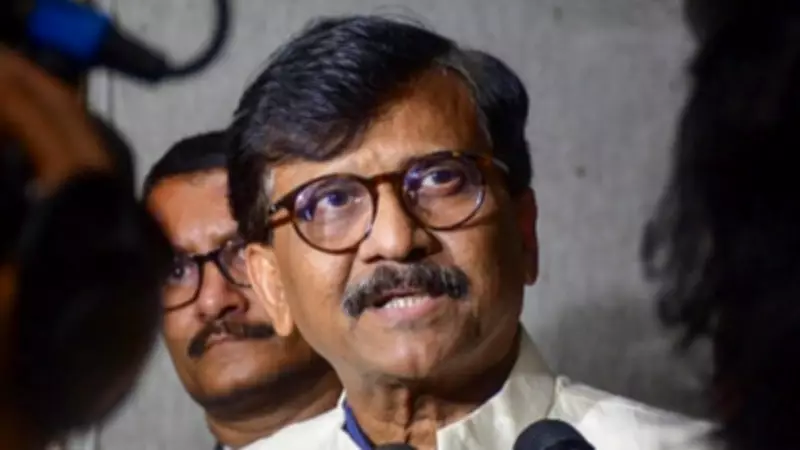
Sanjay Raut Alleges Centre's Strategic Timing of Bill to Marginalize Opposition MPs
Shiv Sena (UBT) leader Sanjay Raut has launched a sharp critique against the central government, accusing it of operating under a significant illusion. Raut contends that the Centre believes opposition Members of Parliament from states currently undergoing elections will abstain from voting in Parliament, thereby facilitating the passage of a contentious bill.
Alleged Ploy to Exploit Election Periods
In a pointed allegation, Raut detailed what he describes as a calculated maneuver by the ruling establishment. He asserts that the government has deliberately chosen to introduce this bill at a time when elections are actively underway in several key regions. Specifically, he highlighted the ongoing electoral processes in West Bengal, Tamil Nadu, Assam, Kerala, and the Union Territory of Puducherry.
"The Centre is under the illusion that opposition MPs from these poll-bound states will not participate in parliamentary votes," Raut stated, emphasizing his view that this timing is not coincidental but a strategic ploy. He suggests that by scheduling the bill during these elections, the government aims to capitalize on the reduced presence or divided attention of opposition lawmakers, who may be preoccupied with campaign duties in their respective constituencies.

Implications for Parliamentary Democracy
This accusation raises serious questions about the integrity of parliamentary proceedings and the democratic process. Raut's claims imply that the Centre is attempting to manipulate the legislative calendar to gain an unfair advantage, potentially undermining the principle of fair representation and debate. The involvement of multiple states and a union territory adds a layer of complexity, as it affects a broad swath of the opposition's voting bloc.
The timing of this bill could significantly impact the opposition's ability to effectively counter or amend the proposed legislation, Raut warned. He urged for greater transparency and ethical consideration in parliamentary scheduling, calling on the government to respect the electoral commitments of all MPs, regardless of their political affiliations.
Broader Political Context
This incident occurs against a backdrop of heightened political tensions, with elections in these states being closely watched for their national implications. Raut's allegations contribute to the ongoing discourse about the use of parliamentary tactics and the balance of power between the ruling party and the opposition. As the political landscape evolves, such claims are likely to fuel further debate on the norms and practices of Indian democracy.
In summary, Sanjay Raut's allegations highlight a contentious issue at the intersection of elections and parliamentary governance, calling into question the timing and motives behind the Centre's legislative actions.






