

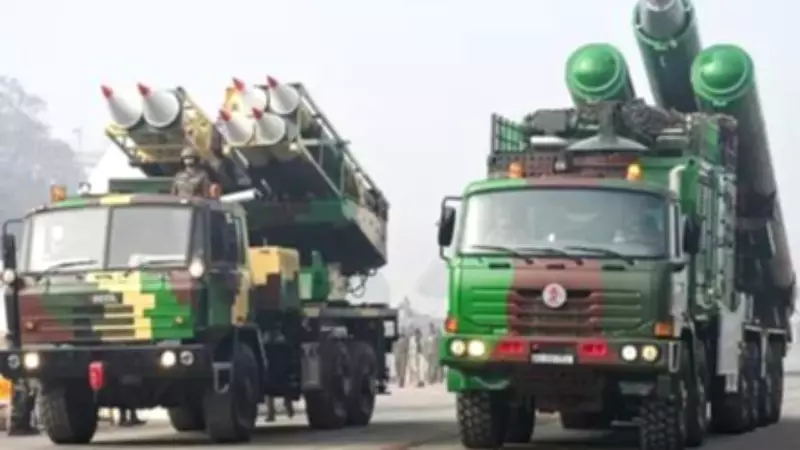
Record Defence Budget of Rs 7.8 Lakh Crore Announced Amid Rising Border Tensions
In response to escalating border security challenges from China and Pakistan, Finance Minister Nirmala Sitharaman on Sunday unveiled an unprecedented defence outlay of Rs 7.8 lakh crore for the upcoming financial year. This allocation marks a substantial 15% increase from last year's Rs 6.8 lakh crore, positioning it as the highest-ever defence budget in India's history. The outlay constitutes approximately 2% of the projected GDP for the next fiscal year, underscoring the government's heightened focus on national security.
Strategic Allocation and Government Priorities
The total defence budget proposed accounts for 14.7% of the government's overall expenditure, making it the largest allocation among all ministries. This significant hike is driven by multiple strategic imperatives, including the modernization of armed forces as part of the government's vision for a technologically advanced and self-reliant military. The increased funds will also address financial requirements stemming from emergency procurement of arms and ammunition following Operation Sindoor, highlighting the urgent need for enhanced operational readiness.
Breakdown of Defence Expenditure
The defence budget is meticulously structured to cover various critical areas. Of the total allocation, 27.9% is earmarked for capital expenditure, which includes investments in new equipment and infrastructure. Revenue expenditure is divided into two key segments: 20.2% for sustenance and operational preparedness, ensuring that forces remain combat-ready, and 26.4% for pay and allowances, supporting the welfare of military personnel. Additionally, 21.8% is allocated for defence pensions, recognizing the contributions of veterans, while 3.6% is set aside for civil organizations within the defence sector.

Boosting Domestic Defence Industries
In a move to strengthen India's defence manufacturing capabilities, the government has reinforced its policy to support domestic industries through budgetary measures. A substantial Rs 1.4 lakh crore, representing 75% of the capital acquisition budget, has been earmarked for procurement from domestic industries. This initiative aligns with the 'Aatmanirbhar Bharat' vision, aiming to reduce dependency on imports and foster indigenous production. Furthermore, Finance Minister Sitharaman announced a waiver on basic customs duty for raw materials imported for manufacturing aircraft parts used in maintenance, repair, or overhaul by defence sector units, thereby incentivizing local manufacturing.
Modernization and Future Acquisitions
During the fiscal year 2025-26, up to the third quarter ending December 2025, the defence ministry has already concluded contracts worth Rs 2.1 lakh crore and granted acceptance of necessity approval for over Rs 3.5 lakh crore. These projects under capital acquisition are set to equip the armed forces with next-generation capabilities, including fighter aircraft, smart and lethal weapons, ships, submarines, unmanned aerial vehicles (UAVs), drones, and specialist vehicles. Notably, nearly Rs 63,734 crore of capital expenditure has been allocated for aircraft and aero engines, coinciding with the Indian Air Force's plans to acquire 114 French-origin Rafale jets to bolster its combat fleet.
Political Reactions and Future Outlook
Defence Minister Rajnath Singh expressed gratitude to Prime Minister Narendra Modi and Finance Minister Nirmala Sitharaman for the significant hike in the defence outlay, emphasizing its importance for national security. However, the budget has faced criticism from some quarters, such as West Bengal Chief Minister Mamata Banerjee, who slammed the Centre's budget as having "nothing for the common man" and labeled it a "Humpty Dumpty" budget. Despite this, the government remains steadfast in its commitment to enhancing defence capabilities, with the record allocation reflecting a proactive approach to addressing border threats and advancing military modernization.






