

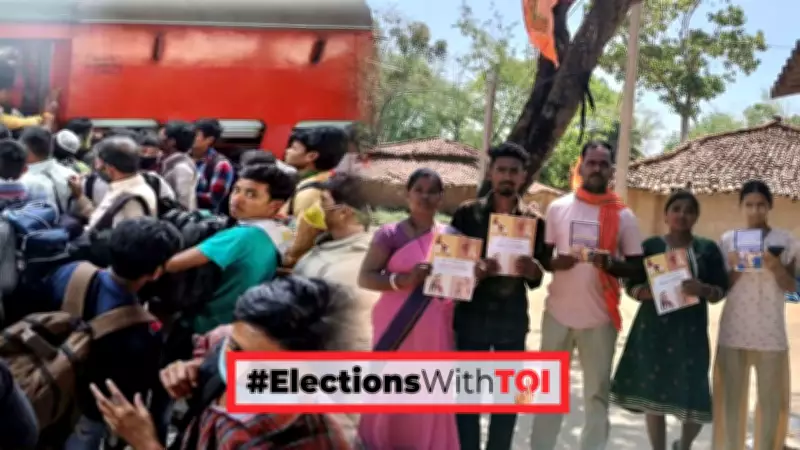
West Bengal Elections Trigger Massive Reverse Migration Across India
A substantial and growing wave of reverse migration is currently sweeping across India, with thousands of migrant workers urgently returning to their home state of West Bengal ahead of the crucial Assembly elections. This unprecedented movement is primarily driven by deep-seated fears and anxieties surrounding the ongoing Special Intensive Revision of electoral rolls, which many workers believe could have severe consequences for their political and economic futures.
Voter Roll Fears Drive Urgent Homeward Journeys
At the heart of this migration surge lies a widespread concern among migrant communities that failure to participate in the upcoming West Bengal polls could jeopardize their inclusion in voter lists. More critically, many workers fear this could subsequently impact their access to essential welfare benefits and government schemes tied to their voter registration status. This perception has created a powerful incentive for workers to prioritize their electoral participation over immediate employment stability.
In major metropolitan hubs including Delhi, Mumbai, and Bengaluru, domestic workers, construction labourers, and informal sector employees are scrambling to secure transportation back to West Bengal. The situation has become so urgent that many are willing to endure significant financial strain and job uncertainty to ensure they reach their home constituencies before polling begins.

Transportation Challenges and Economic Sacrifices
The scale of this migration has overwhelmed transportation systems across the country. Railway services to West Bengal are reporting heavy waitlists and extremely limited ticket availability, forcing many returning workers to opt for arduous long-distance bus journeys instead. Despite the higher costs and physical discomfort involved, these alternatives have become the only viable option for thousands.
Entire communities and clusters of migrant workers are organizing collective travel arrangements, banding together to share resources and support during the journey home. This mass exodus represents a significant economic sacrifice, as workers leave behind wages and employment opportunities in urban centers to fulfill what they perceive as a critical civic duty with long-term implications for their welfare.
Urban Labour Shortages Emerge as Polling Nears
As the election dates draw closer, the urgency of this reverse migration has intensified dramatically. Major Indian cities are already reporting noticeable labour shortages across multiple sectors. Households are struggling to find domestic help, while small industries and construction sites are experiencing workforce gaps that threaten to disrupt operations and productivity.
The situation highlights how political messaging and uncertainty surrounding voter registration processes can directly influence migration patterns and workforce availability on a national scale. The disruption to urban economies underscores the interconnected nature of political processes and labour mobility in contemporary India.
Broader Implications for Migration and Politics
This reverse migration phenomenon reveals important insights about how electoral processes intersect with migration dynamics in India. The decisions of thousands of migrant workers to return home despite economic costs demonstrate the perceived importance of voter registration for accessing social welfare benefits and maintaining political identity.
The widespread disruption to urban workforce availability serves as a stark reminder of how political events in one state can create ripple effects across the entire country's labour market. As West Bengal prepares for its Assembly elections, the mass movement of workers back to their home constituencies represents both a challenge for urban economies and a significant political mobilization with potential implications for electoral outcomes.






