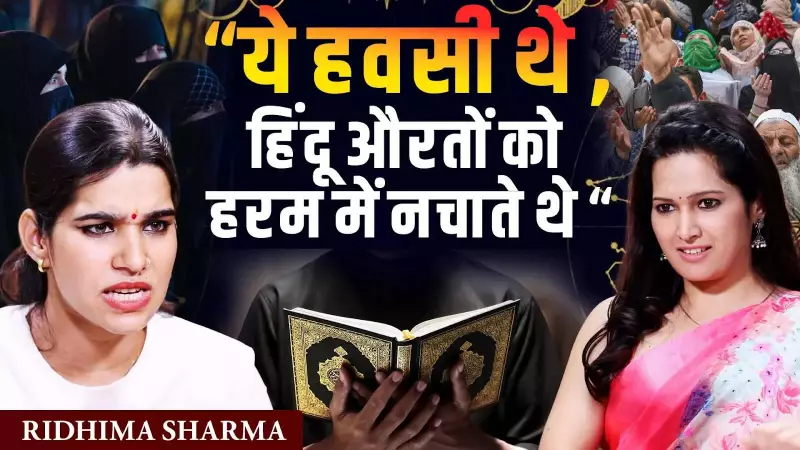
In a thought-provoking video released on December 29, 2025, analyst Ridhima Sharma presents a hard-hitting examination of religious conversions, framing the contemporary debate within a deep historical and regional context. The discussion moves beyond surface-level arguments, connecting the legacy of Mughal invaders with present-day ideological conflicts and recent reports of violence in neighboring Bangladesh.
Connecting Historical Patterns to Modern Realities
Sharma's analysis does not treat current events in isolation. She meticulously draws lines from the historical impact of Mughal invasions on the Indian subcontinent's social and religious fabric to the ongoing debates about faith and identity in modern India. The video suggests that understanding this long-term historical impact is crucial for decoding today's complex socio-political landscape. This approach encourages viewers to look at patterns rather than isolated incidents.
A Broader Framework: From Ideology to Violence
The scope of the discussion expands further to include recent reports of murders and violence in Bangladesh. Sharma links these disturbing events to the broader ideological and historical patterns discussed earlier. By doing so, she posits that the challenges related to religious identity and conflict are not confined by national borders but are part of a larger regional historical narrative. The inclusion of these reports grounds the historical discussion in stark, contemporary realities.

A Call for Critical, Informed Dialogue
The core objective of Ridhima Sharma's video is to shift the discourse from emotion to critical thinking. Through a presentation of facts, historical references, and sharp questioning, the analysis aims to spark a more informed and nuanced dialogue on issues that are often highly sensitive. The video stands as a direct challenge to react purely on sentiment, urging the audience to engage with depth and reason. It positions itself not as a provider of easy answers, but as a catalyst for thoughtful conversation on the intricate ties between past and present.
Ultimately, this analysis by Ridhima Sharma serves as a comprehensive primer that ties together historical legacy, contemporary ideological battles, and regional violence. It underscores the importance of a fact-based perspective in navigating the complex intersections of history, religion, and politics in India and its neighborhood.