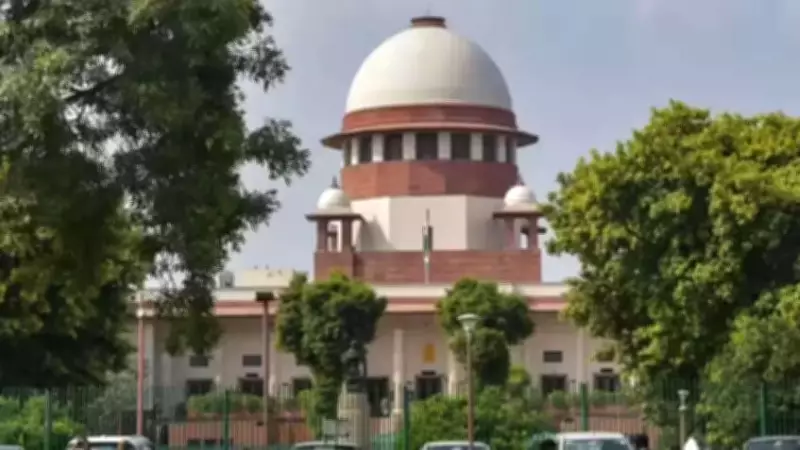
In a significant development at the Supreme Court of India, RJD MP Manoj Jha presented arguments on Wednesday challenging the Election Commission's authority regarding voter classification and deletion from electoral rolls. The case has drawn attention to fundamental questions about democratic rights and institutional powers.
Core Argument: EC's Limited Authority on Citizenship Matters
Senior advocate Kapil Sibal, representing MP Manoj Jha, articulated a clear position before a bench comprising Chief Justice Surya Kant and Justice Joymalya Bagchi. Sibal emphasized that the Election Commission possesses no legal power to classify voters as non-citizens or to delete them from electoral rolls based on citizenship doubts.
The constitutional position presented was unambiguous: The EC can only flag individuals with doubtful citizenship status to the Union government. The final authority to decide citizenship disputes rests exclusively with the central government, not with the election body.

Democratic Rights at Stake
Sibal argued passionately that the EC cannot arbitrarily strike off names from electoral rolls by terming citizenship as doubtful. Such actions, he contended, deprive citizens of their valuable democratic right to choose their representatives. This right forms the bedrock of India's democratic framework and must be protected against procedural overreach.
"The judgment that the court will render in this case will be no ordinary one," Sibal declared, "for it will decide the future of democracy of India." This statement reflects the gravity of the constitutional questions being examined.
Procedural Concerns and Allegations
The senior advocate criticized what he described as an opaque process adopted by the Election Commission during the Special Summary Revision (SIR) of electoral rolls. With repeated refrains of "not fair," Sibal outlined procedural concerns that he believes undermine electoral integrity.
A key procedural demand emerged: Once the EC flags a doubtful citizenship case to the Centre, it must refrain from removing the voter's name from the electoral roll until the government has conclusively decided the citizenship dispute. This would prevent premature disenfranchisement.
Judicial Scrutiny and Questions
Justice Bagchi raised an important procedural question during the hearing: When an objection to a person's citizenship is raised before the Electoral Registration Officer (ERO), how should this officer proceed? The justice noted that the ERO would typically seek documentary proof and hear all parties before deciding citizenship disputes.
Sibal countered this procedural approach with a fundamental question: "How can ERO decide who is an illegal migrant?" He expressed concern that crores of voters might be deleted from electoral rolls on what he characterized as flimsy grounds, potentially affecting electoral outcomes and democratic representation.
Contextual Background and Previous Concerns
The Chief Justice-led bench provided important context about previous concerns regarding electoral roll revisions. The court noted that significant apprehension had been raised about the deletion of 65 lakh names from Bihar's voters list. However, the bench questioned whether any affected individuals had actually filed appeals against these deletions.
The initial fears about large-scale deletions did not materialize as anticipated, according to judicial observations. This context adds complexity to the current legal challenge, suggesting that while procedural concerns exist, their practical impact might require careful evaluation.
Lack of Justification for Pan-India Exercise
Sibal raised another critical point during arguments: The Election Commission has not provided adequate justification for conducting a pan-India Special Summary Revision of electoral rolls. Under the mandate for carrying out special revisions, the EC must provide reasons for such exercises.
"Why is such an exercise required to be done near the elections?" Sibal questioned, noting that the EC has offered no satisfactory answer to this timing concern. The proximity of electoral roll revisions to election periods raises questions about potential political implications.

Gender Disparity Concerns
Social activist Yogendra Yadav presented additional data-driven concerns during the proceedings. He noted that wherever the Special Summary Revision was conducted, the ratio of female voters has shown a concerning decline.
Yadav attributed this pattern to what he described as technically faulty SIR processes. He contrasted this with the situation in Assam, where only special revision was carried out, resulting in an increased ratio of women voters. This discrepancy suggests that implementation methods significantly affect demographic representation in electoral rolls.
Judicial Fatigue and Timeline
The bench, which has been hearing arguments on petitions challenging the constitutional validity of SIR for the past three months, displayed signs of judicial fatigue. Chief Justice Kant and Justice Bagchi directed the petitioners' counsel to conclude their arguments within 45 minutes on Thursday, indicating the court's desire to move toward resolution after extensive deliberations.
This case represents a crucial intersection of electoral law, constitutional rights, and institutional authority. The Supreme Court's eventual ruling will establish important precedents regarding the balance between electoral integrity and citizen rights in India's democratic framework.