RSS Chief Mohan Bhagwat Questions Live-In Relationships at Uttarakhand Centenary Event
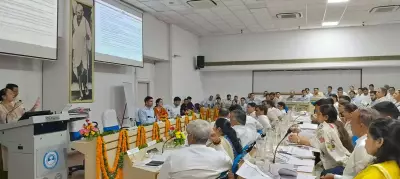
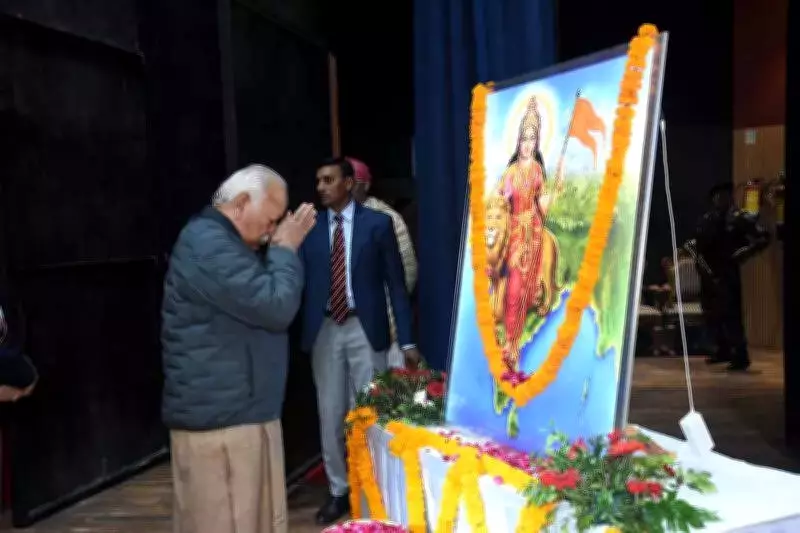
In a significant address during the centenary year celebrations of the Uttarakhand unit of the Rashtriya Swayamsevak Sangh (RSS), chief Mohan Bhagwat on Sunday raised questions about the practice of live-in relationships. Speaking at a program in Dehradun, Bhagwat emphasized that marriage represents a profound responsibility that extends beyond individual partners to encompass families and society at large.
Marriage as Responsibility Versus Live-In Arrangements
When addressing whether live-in relationships should be permitted in Uttarakhand, Bhagwat articulated a clear position. "Marriage represents responsibility -- not just between partners, but also towards families and society," he stated. His remarks gain particular relevance against the backdrop of Uttarakhand's Uniform Civil Code (UCC), which last year introduced provisions requiring mandatory registration for live-in relationships.
Bhagwat elaborated on his perspective by describing society as fundamentally built on families and households that are grounded in values, culture, and economic activity. "When a marriage takes place, two individuals take responsibility for each other's lives. Two families come together and accept the duty of fulfilling their responsibilities towards both their families and society," he explained.

The Human Imperative of Responsibility
The RSS chief further argued that people must embrace what he termed a "natural responsibility" towards children. He presented a stark contrast between human and animal behavior, stating, "If one does not wish to take responsibility, one may choose the path of renunciation. But marriage means accepting responsibility. Fulfilling mere needs without responsibility is seen among animals because they do not take responsibility, whereas humans, being the most intelligent beings and proud of being the foremost creation, must shoulder responsibility."
Bhagwat concluded this point by asserting, "If one wishes to remain human, one must accept responsibility. One should keep this in mind, then such questions will not arise."
Clarifying the RSS Position on Uniform Civil Code
On the topic of the Uniform Civil Code, Bhagwat provided important clarifications regarding the RSS stance. He explicitly stated that "the RSS is not in favour of uniformity for its own sake." Elaborating further, he said, "The aim is not to bring uniformity. It is not that without UCC, nothing can function. Our country believes in unity in diversity."
However, Bhagwat acknowledged potential benefits of a properly implemented civil law, noting that "a civil law applicable to all could help strengthen integration if brought through proper consultation."
Scope and Implementation of Uttarakhand's UCC
Regarding the specific scope of the Uniform Civil Code, Bhagwat outlined that "it addresses four aspects -- marriage, divorce, inheritance and adoption -- and provides space for customary law." In the context of Uttarakhand's recently implemented UCC legislation, he highlighted the extensive consultation process that preceded its enactment.
"More than three lakh suggestions were received during consultations, discussions were held and views were considered before implementation," Bhagwat revealed. He expressed confidence that "such a process would prove to be a strong step towards national integration."
Broader Organizational Objectives and Women's Role
Beyond specific policy matters, Bhagwat articulated the broader mission of the RSS organization. He emphasized that "the RSS does not seek political power but aims to organise Hindu society, promote cultural unity and foster character-building." He explained this philosophy by stating, "Sangh's objective is to develop individuals, because only strong individuals can build a strong society and nation."
On the subject of women's participation in governance, Bhagwat advocated for increased representation, declaring, "Their participation in the governance of the country should not be limited to 33%, but to 50%."

The RSS chief's comprehensive address at the Uttarakhand centenary event thus covered multiple dimensions of social organization, personal responsibility, legal frameworks, and national development, providing insights into the organization's perspectives on contemporary social issues.