

RSS Advocates for Global Peace Amid Middle East Tensions
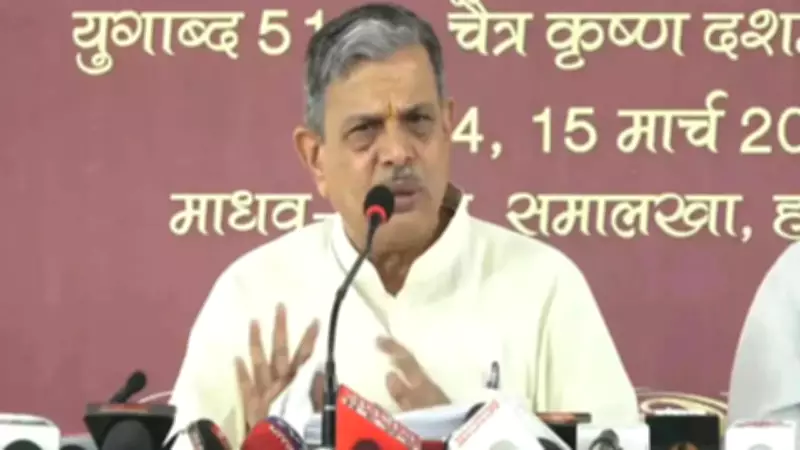
Amid the escalating conflict in the Middle East, the Rashtriya Swayamsevak Sangh (RSS) has issued a strong call for peace, urging an immediate end to the hostilities involving Iran, the United States, and Israel. The organization's general secretary, Dattatreya Hosabale, emphasized the need for swift resolution to restore normalcy for ordinary citizens affected by the violence.
Peace as a Core Principle
Speaking during a media briefing at the three-day Akhil Bharatiya Pratinidhi Sabha (ABPS) meeting in Panipat, Hosabale articulated the RSS's fundamental commitment to global harmony. "We want peace in the world," he stated, according to reports from the Press Trust of India. "Our vision is world peace. Wars arise from a multitude of causes; therefore, in the context of this particular conflict, we too desire that it comes to an end as swiftly as possible, and that the lives of ordinary people return to a state of happiness and peace without delay."
While expressing this desire for de-escalation, Hosabale refrained from commenting on the specific geopolitical reasons behind the ongoing war, focusing instead on the humanitarian impact.

Unwavering Support for Government Actions
Hosabale strongly defended the Indian government's handling of the international crisis, asserting that all steps taken by the administration are aligned with the nation's supreme interests. "What is in the supreme interest of the nation, they (the Indian government) are doing that. What they are doing is right," he told assembled journalists.
This endorsement comes as India continues to monitor the multifaceted fallout from the Middle East conflict, which has significant implications for:
- Global energy supplies and oil prices
- International trade routes and maritime security
- Aviation safety and airspace management
- The welfare of Indian nationals residing in the region
Addressing Domestic Reactions and Communal Harmony
When questioned about reported protests in parts of India following the killing of Iran's Supreme Leader Ayatollah Ali Khamenei, Hosabale emphasized the importance of maintaining peace and communal harmony. He acknowledged that expressions of grief are natural but insisted they must remain peaceful and non-divisive.
"If such things happen, they should be done peacefully. It should not be against any sect or community," he cautioned. "According to Indian tradition, one can be a person's enemy till he is alive, but after one dies, no one remains an enemy. So, after death, if anyone expresses grief, there is nothing wrong in it. But when this is done, it should be seen that it does not cause disturbance to peace."
Clarifying RSS's Historical Stance and Contemporary Vision
Hosabale addressed several other topics during the briefing, providing clarity on the organization's positions:
- UGC Regulations Controversy: He declined to comment on the matter currently before the Supreme Court, stating it would be inappropriate to discuss sub judice issues. "When a decision comes, after going through it, the Sangh will comment," he explained.
- RSS's Relationship with Muslims: Hosabale clarified that RSS founder Dr. Keshav Baliram Hedgewar did not establish the organization to oppose Muslims. He referenced historical debates during British rule where Muslim leaders had defended the RSS against restrictions, arguing the organization was not communal.
- Hindutva Philosophy: He reiterated the RSS position that "the ancestors of all people of India were Hindus" while emphasizing the inclusive vision of Vasudhaiva Kutumbakam—the world as one family.
Message to the Indian Diaspora
Referring to a recent Hyderabad event attended by NRIs and people of Indian origin from 71 countries, Hosabale shared the RSS's message to the global Indian community. "We conveyed a message to the delegates... that the country where you live and eat, you should do good for that country. Because it is the vision of Hindutva: Vasudhaiva Kutumbakam—the entire world is one family," he stated.

"It is not like you are only with India. You have the duty to be with the society there," he added, encouraging diaspora members to contribute positively to their host nations while maintaining their cultural connections.
Organizational Growth and Future Plans
The ABPS meeting, inaugurated by RSS chief Mohan Bhagwat and Hosabale, concluded with resolutions to expand organizational work, strengthen social harmony, and encourage participation of positive forces in national interest. Hosabale reported significant growth in RSS activities:
- Shakhas increased by nearly 6,000 over the past year, now exceeding 88,000
- Number of locations where shakhas are conducted has grown to over 55,000
- Outreach expanded to remote areas including Andaman, Arunachal Pradesh, Leh, and tribal regions
- Plans for 96 training camps in the coming year
The RSS leadership's statements during this critical period reflect both their philosophical commitment to global peace and their practical support for the Indian government's diplomatic and strategic responses to international conflicts.





