

RTI Act's 20-Year Journey: From Democratic Dawn to Fears of Weakening Amendments
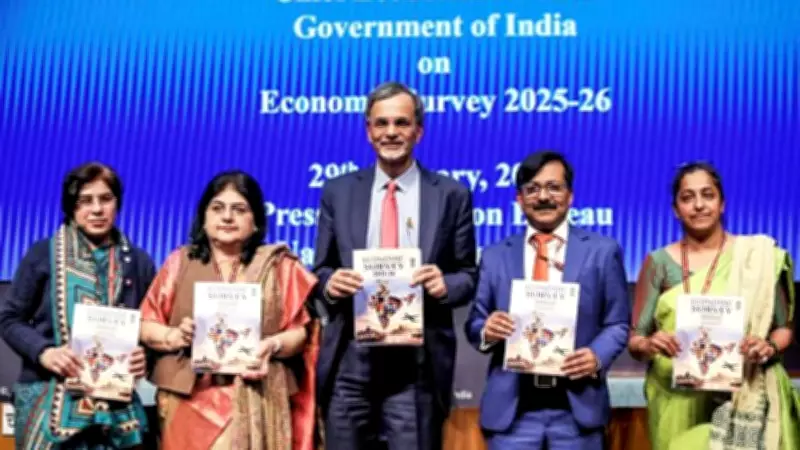
The Right to Information Act, a landmark legislation introduced in 2005, is currently under intense scrutiny as the Economic Survey 2025-26 calls for its re-examination. Tabled in Parliament recently, the survey suggests adjustments that have sparked widespread concern among political parties and civil society groups.
Economic Survey's Proposed Changes Spark Controversy
The Economic Survey 2025-26 has proposed significant modifications to the RTI Act, including exemptions for deliberative policy-making processes and potentially introducing a ministerial veto with parliamentary oversight. These suggestions aim to prevent disclosures that could "unduly constrain governance," according to the survey document.
Congress president Mallikarjuna Kharge has vehemently opposed these proposals, calling them a plan to "murder" the UPA-era legislation. He argues this comes after what he describes as "systematic weakening" of the Act since 2014.

The Transformative Beginning of RTI Legislation
The RTI Act emerged from grassroots movements dating back to the 1970s, culminating in the Freedom of Information Act of 2002. When the Manmohan Singh-led UPA government came to power in 2004, the National Advisory Council under Sonia Gandhi prioritized strengthening right to information laws.
In 2005, the UPA government introduced the RTI Bill, which Prime Minister Manmohan Singh hailed as "the dawn of a new era in our processes of governance." The final Act came into force on October 12, 2005, with 150 amendments to the previous legislation, applying across all government levels including local bodies.
Evolution and Amendments Over Two Decades
Over the past twenty years, the RTI Act has undergone several significant changes. Initially, the UPA government itself attempted amendments in 2006 to remove "file notings," though these were thwarted by public protests. By 2011, Prime Minister Singh expressed concerns about RTI queries with "no bearing on public interest," and later spoke of "frivolous and vexatious" use of the Act.
The Second Administrative Reforms Commission recommended exempting armed forces from RTI, while the CBI was already exempted during UPA tenure. Interestingly, early amendment attempts were opposed not just by activists but also by opposition parties including the BJP.
Recent Changes Under NDA Government
In 2019, the Modi government introduced amendments altering the terms, tenure, and emoluments of Information Commissioners, removing their equivalence with Election Commission officials. This was widely perceived as weakening the RTI structure.
Further dilution came in 2023 with the Digital Personal Data Protection Act, which exempted broader personal information disclosures that were previously allowed under RTI if public interest justified it.
Current Challenges and Implementation Issues
Today, the RTI Act faces multiple challenges despite its broad definition of "information" covering records, documents, emails, opinions, and electronic data. Activists note increasing difficulty in obtaining disclosures, with approximately 40 to 60 lakh RTI applications filed annually across India.
A significant example of non-compliance involves six national political parties - Congress, BJP, CPI(M), CPI, NCP, and BSP - declared as "public authorities" by the Central Information Commission in June 2013. None have fully complied with this order, failing to appoint Public Information Officers or respond to requests.
According to an October 2025 report by Satark Nagrik Sangathan, 4.13 lakh appeals and complaints were pending before 29 information commissions as of June 30 last year, highlighting systemic implementation issues.
International Comparisons and Future Concerns
The Economic Survey draws parallels with RTI laws in the US, UK, and Sweden, noting that unlike India's legislation, international laws typically exempt internal personnel rules, inter-agency memos, and financial regulations from disclosure.

The survey argues that if every draft or remark is disclosed, officials might "hold back" from expressing "bold ideas," potentially stifling governance innovation. However, transparency campaigners like Anjali Bharadwaj counter that these concerns lack evidence and that the Act already contains robust exemption mechanisms.
As India marks two decades of the RTI Act, the debate continues between those advocating for stronger transparency mechanisms and those concerned about governance constraints, with the Economic Survey's proposals adding fresh urgency to this democratic discussion.





