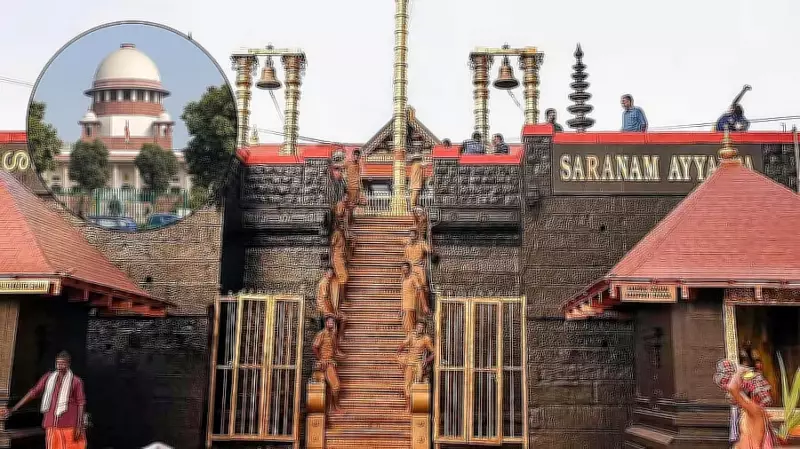
The Supreme Court of India on Tuesday observed that barring menstruating women from entering the Sabarimala temple may not be universally considered a taboo, but rather a matter of individual choice. The observation came during the hearing of a batch of petitions challenging the practice of excluding women of menstrual age from the famous hill shrine in Kerala.
Senior Advocate's Argument
Senior advocate Vijay Hansaria, representing some of the parties in the case, submitted that the exclusion of women from Sabarimala is primarily based on their menstrual age. He argued that the restriction is not rooted in any notion of impurity or taboo, but rather in the traditions and beliefs of the devotees. Hansaria emphasized that the practice should be viewed through the lens of individual faith and choice, rather than being labeled as discriminatory.
Supreme Court's Response
A bench of the Supreme Court, while hearing the arguments, noted that the question of whether the practice amounts to a taboo depends on the perspective of the individual. The court observed that what may be considered a taboo by some could be seen as a matter of personal religious belief by others. The bench indicated that it would examine the constitutional validity of the practice while respecting the sentiments of the devotees.

Background of the Case
The Sabarimala temple, dedicated to Lord Ayyappa, has traditionally barred women aged between 10 and 50 years from entering the sanctum sanctorum. This practice has been challenged in the Supreme Court by various petitioners, who argue that it violates the fundamental rights of women, including the right to equality and freedom of religion. The Kerala government has also supported the entry of women of all ages into the temple.
Key Points Raised During Hearing
During the hearing, several key points were raised by both sides. The advocates supporting the ban argued that the restriction is an essential part of the temple's religious customs and should be protected under Article 26 of the Constitution, which guarantees the right to manage religious affairs. On the other hand, the petitioners contended that the practice is discriminatory and violates the constitutional guarantee of equality.
The Supreme Court's observation that the ban depends on individual choice has added a new dimension to the debate. The court is expected to deliver its verdict after hearing all parties involved. The case has garnered significant attention across the country, with many awaiting a landmark judgment that could set a precedent for similar practices in other religious institutions.
Implications of the Case
The outcome of this case could have far-reaching implications for the interpretation of religious freedom and gender equality in India. If the Supreme Court rules in favor of allowing women of all ages into Sabarimala, it could pave the way for challenging similar restrictions in other temples and religious places. Conversely, if the court upholds the ban, it may reinforce the autonomy of religious institutions to determine their own customs and practices.
The hearing is scheduled to continue, with the Supreme Court expected to hear further arguments from both sides before arriving at a final decision. The case remains one of the most significant legal battles concerning women's rights and religious freedom in India.