

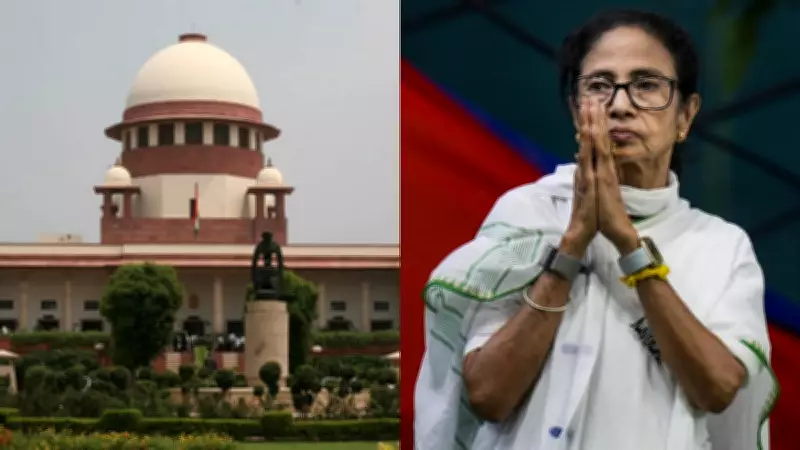
The Supreme Court has ruled that Mamata Banerjee and other political leaders can file fresh pleas concerning the issue of victory margins being less than the number of votes allegedly deleted in the recent West Bengal Assembly Elections. The court's decision opens a new legal avenue for challenging election results based on discrepancies in vote counting.
Background of the Case
In the recently concluded West Bengal Assembly Elections, the Bharatiya Janata Party (BJP) secured a landslide victory, winning 207 seats in the 294-member assembly. The Trinamool Congress (TMC), led by Mamata Banerjee, managed to win only 80 seats. The significant margin of victory for the BJP has raised questions about the integrity of the electoral process.
Allegations of Vote Deletion
Opposition parties, including the TMC, have alleged that a large number of votes were deleted from the electronic voting machines (EVMs). They claim that in several constituencies, the victory margin of the winning candidate was less than the number of votes that were purportedly deleted. This discrepancy, they argue, could have altered the outcome in those seats.

Supreme Court's Directive
The Supreme Court, while hearing a petition related to the matter, observed that the petitioners could file fresh pleas specifically addressing the issue of vote deletion and its impact on victory margins. The court did not make any conclusive remarks on the allegations but allowed the legal process to continue.
Implications for Electoral Reforms
This development highlights the ongoing debate over the reliability of EVMs and the need for robust electoral safeguards. The court's decision may lead to a more detailed examination of the vote deletion claims and could set a precedent for future election disputes.






