Supreme Court Firmly Rejects Further Extension for SIR Claims in West Bengal
The Supreme Court of India has taken a definitive stance regarding the Special Intensive Revision (SIR) of electoral rolls in West Bengal, firmly stating that no further extensions will be granted for filing claims and objections. This decision came during a hearing on Wednesday, where the court emphasized the importance of maintaining the integrity of the electoral process.
Court's Unwavering Position on Timeline
Chief Justice of India Surya Kant, presiding over a two-judge bench that included Justice Joymalya Bagchi, made it clear that extending deadlines would undermine the system. "No, we will not grant any further extension. There is no question. Otherwise, it will become a mockery of the system," Justice Kant asserted during the proceedings. This statement reflects the court's commitment to ensuring that electoral procedures are conducted efficiently and without unnecessary delays.
State's Plea and New Developments
Senior Advocate Kapil Sibal, representing the state of West Bengal, presented an application highlighting new developments that he described as serious and unprecedented. Sibal urged the bench to hear the matter on Thursday, arguing that the situation required immediate attention. "They have done something more. It's far more serious," Sibal stated, though specific details of these developments were not elaborated upon in open court.

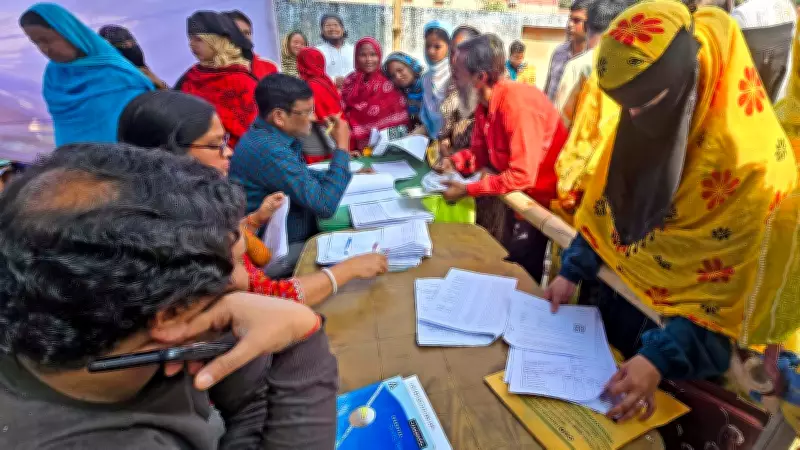
Sibal further explained the practical challenges faced by the state, noting that while notices had been issued to a significant number of people, hearings had only been conducted for a fraction of them. "They have to give hearing to 9 lakh people to complete that exercise. And so far they have given hearing to only 1 lakh people. The data is all there," he emphasized, urging the court to consider the matter at least by the following week if not immediately.
ECI's Concerns and Court's Previous Directions
Senior Advocate Rakesh Dwivedi, appearing for the Election Commission of India (ECI), expressed concerns that granting extensions could lead to an endless cycle of applications and delays. "This will become an endless exercise," Dwivedi cautioned, highlighting the potential for procedural stagnation.
The Chief Justice pointed out that the court had already issued comprehensive directions in its January 19 order, which required the ECI to publish names flagged for logical discrepancies and allow an additional 10 days for objections. Despite this, Sibal argued that the current developments fell outside the scope of those directions, describing them as "unheard" and necessitating separate consideration.
Political Context and Broader Implications
During the exchange, Justice Kant remarked that "everyday something will happen" depending on the political climate, to which Sibal responded that the issue was not politically motivated but rather a matter of procedural capacity. The bench ultimately agreed to hear the matter the following week while maintaining its stance against further extensions.
In a related development, the court also addressed a plea from Tamil Nadu seeking an extension of the January 19 directions to their state. Justice Kant orally remarked that the guidelines established for West Bengal should apply uniformly to Tamil Nadu as well. Senior Advocate D S Naidu, representing the ECI, supported this view, stating, "Once we have laid down some uniform guidelines for Bengal, there is no reason it cannot be applied in Tamil Nadu. So, no order will be required." Naidu committed to taking instructions on this matter, with the bench scheduling a hearing for Thursday.
Conclusion and Future Proceedings
The Supreme Court's firm refusal to extend deadlines for the SIR claims in West Bengal underscores its dedication to upholding electoral integrity and preventing procedural delays. As the court prepares to hear further arguments next week, this decision sets a precedent for how similar cases might be handled in the future, emphasizing the need for timely and efficient electoral processes across India.