Supreme Court Extends Deadline for West Bengal Electoral Roll Scrutiny
The Supreme Court of India has granted a significant extension to the deadline for scrutinizing claims and objections under the special intensive revision of electoral rolls in West Bengal. In a crucial development, the court has also demanded a personal affidavit from the state's Director General of Police concerning serious allegations of threats, violence, and obstruction faced by election officials during this critical democratic exercise.
Court Directs Extension of Scrutiny Process
A bench led by Chief Justice of India Surya Kant, along with Justices Joymalya Bagchi and N V Anjaria, has ordered that the scrutiny of documents and objections be extended by at least one week beyond the previously scheduled date of February 14 for publication of the final electoral roll. The extension was granted in recognition of the substantial time required to properly examine all claims submitted by citizens.
The court delivered a stern warning against any attempts to disrupt the special intensive revision process. "We will not allow anyone to create any impediment in the SIR exercise. It must be clear to the states," declared Chief Justice Surya Kant during the hearing of multiple petitions, including one filed by West Bengal Chief Minister Mamata Banerjee.

Clarification on Electoral Authorities' Roles
Addressing a key point of contention, the bench provided crucial clarification regarding the respective roles of different electoral authorities. The court firmly reiterated that final decisions on claims and objections can only be made by Electoral Registration Officers, while micro-observers appointed by the Election Commission of India have strictly an assisting function.
"The responsibility already assigned to micro-observers shall be only to assist the DEO/EROs. In other words, the final decision will be taken by the EROs only," the court stated unequivocally. The bench further clarified that EROs are legally obligated to consider all objections according to statutory requirements, regardless of whether the objector appears for a personal hearing, and that the authenticity of submitted documents may be verified independently.
Deployment of Group B Officers Streamlined
To enhance the efficiency of the electoral roll revision process, the Supreme Court directed the West Bengal government to ensure that all 8,550 Group B officers, whose list was submitted during proceedings, report to district collectors or EROs by Tuesday evening. From this substantial pool of officers, the Election Commission may shortlist individuals equivalent to the number of micro-observers already engaged, following assessment of their bio-data and professional experience.
The selected officers will receive brief training, with their deployment patterns and work profiles to be determined exclusively by the Election Commission. The poll panel retains full authority to replace any officers found not performing their duties adequately.
Notice Issued to DGP Over Alleged Violence
The Supreme Court took serious note of the Election Commission's affidavit detailing allegations of intimidation, hostility, and burning of notices by miscreants during the electoral roll revision process. In response, the bench issued formal notice to the West Bengal Director General of Police, directing him to file a personal affidavit addressing these grave concerns.
The court acknowledged the ECI's submission that despite repeated complaints, no First Information Reports had been registered concerning alleged violence and mass burning of Form 7 objections. This development follows the court's January 19 order directing the DGP to ensure proper maintenance of law and order throughout the special intensive revision exercise.
Solicitor General Tushar Mehta, representing the central government, emphasized during proceedings that "a message must go that the Constitution of India applies to all states."

Concerns Over Voter Exclusion Addressed
During the hearing, senior advocate Shyam Divan, representing Chief Minister Mamata Banerjee, expressed apprehensions regarding the appointment of micro-observers from outside West Bengal and the potential for "mass exclusion" of eligible voters from electoral rolls. "We don't want any mass exclusion," Divan told the bench.
The court acknowledged these concerns while simultaneously reinforcing that statutory authority to decide claims rests exclusively with Electoral Registration Officers. The bench was hearing multiple petitions filed by Trinamool Congress leaders and others challenging the conduct of the special intensive revision in West Bengal, alongside petitions by Sanatani Sangsad, poet Joy Goswami, and other concerned parties.
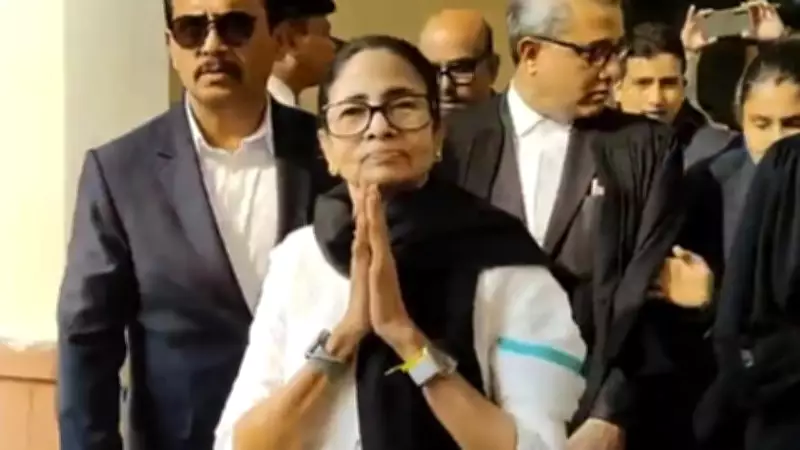
While Banerjee's petition questions the Election Commission's categorization of voters under a "logical discrepancy" category, Sanatani Sangsad has sought enhanced protection for election officials and deployment of state police under ECI control. Last week, Chief Minister Banerjee appeared personally before the Supreme Court, alleging that West Bengal was being specifically targeted ahead of assembly elections and raising concerns about minor name mismatches arising from translation issues between Bengali, local dialects, and official records.