

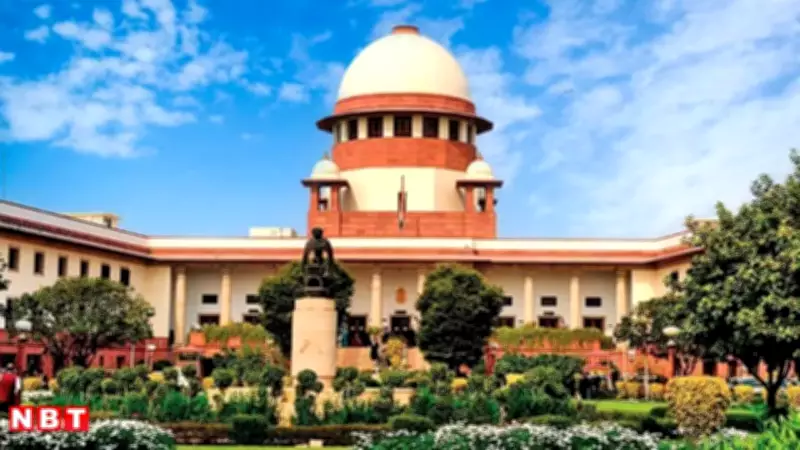
Supreme Court Sounds Alarm Over West Bengal Electoral Roll Revision Process
The Supreme Court of India on Monday voiced significant apprehensions regarding the ongoing Special Intensive Revision (SIR) of electoral rolls in West Bengal. Justice Joymalya Bagchi, part of the bench, underscored the critical necessity for establishing a "robust appellate mechanism" to address cases of wrongful voter deletions. However, the court explicitly declined to intervene in individual petitions, directing affected voters to pursue their cases through existing appellate tribunals.
Concerns Over Scale and Accuracy of Voter List Exercise
Justice Bagchi highlighted the immense scale and pressure of the electoral roll revision process, revealing that judicial officers handling SIR adjudication were processing more than 1,000 documents daily. "If the accuracy is 70 percent then the activity should be rated as excellent... there will always be a margin of error," he stated, according to Live Law reports. The judge warned that such errors could have serious electoral consequences, particularly in closely contested elections where even small percentages of excluded voters could determine outcomes.
"Right to vote... is not only constitutional but sentimental," Justice Bagchi emphasized, drawing attention to the fundamental importance of electoral participation in a democracy. The bench, led by Chief Justice Surya Kant, was hearing petitions from voters whose names had been removed from electoral rolls and whose appeals remained pending before appellate tribunals.

Inconsistencies with Previous Election Commission Positions
Justice Bagchi pointed to apparent inconsistencies in the Election Commission's approach, specifically referencing the Bihar SIR proceedings where the commission had taken an "unequivocal" position that voters listed in the 2002 electoral roll would not need to submit additional documents. Questioning the deviation in West Bengal, the judge remarked, "Please see your written submissions in Bihar case... you had said the 2002 electorate need not give documents," suggesting the poll body now appeared to be "improvising" its position.
The judge further highlighted that West Bengal had introduced a new 'logical discrepancy' category not present in other states' revision processes, raising concerns about inconsistency in implementation and its potential impact on legitimate voters.
Court Declines Intervention, Directs Petitioners to Tribunals
Despite expressing these significant concerns, the bench refused to extend the April 9 deadline for freezing electoral rolls and declined to entertain the petitions directly. "We will not entertain this. Better you pursue there (before AT)," Chief Justice Surya Kant stated, emphasizing that appellate tribunals must decide the cases. The court also cautioned against questioning the integrity of judicial officers, with the CJI noting they had done a "commendable job" under challenging circumstances.
Petitioners had argued they were valid voters listed in the 2002 electoral rolls and possessed supporting documents including Aadhaar cards and passports, but their appeals were not being heard in a timely manner. During proceedings, the court stressed that the process must not devolve into a "blame game" between state authorities and the Election Commission, with Justice Bagchi observing that voters were being "sandwiched between two Constitutional authorities."
Massive Electoral Exercise Ahead of West Bengal Elections
The SIR process, being conducted in preparation for the upcoming West Bengal Assembly elections, has already resulted in the removal of over 27 lakh names following adjudication. Nineteen tribunals are now tasked with hearing more than one lakh appeals each, highlighting the enormous scale of the challenge. The court noted that as many as 25–35 lakh appeals may require adjudication, underscoring the significant logistical burden on tribunals and the urgency of ensuring due process within the tight electoral timeline.

In disposing of the plea, the court clarified that if petitioners succeed before the tribunals, "necessary consequences shall follow," while keeping the remedy of appeal available. Justice Bagchi stressed that appellate tribunals must adopt a "principle of inclusion" when deciding cases, prioritizing the fundamental right to vote while maintaining electoral integrity.





