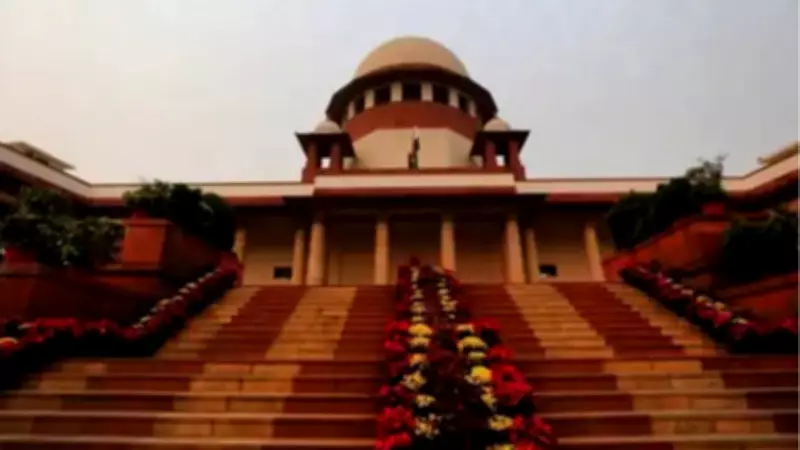
The Supreme Court of India has taken a significant stance on the contentious issue of political freebies, declaring petitions challenging this practice as matters of paramount importance that demand immediate judicial attention. In a notable development, the apex court has decided that these crucial petitions will be heard by a three-judge bench, signaling the gravity of the constitutional questions involved.
Judicial Recognition of Public Interest
Presiding over a two-judge bench, Chief Justice of India Surya Kant emphasized the critical nature of these petitions, stating unequivocally that "It is of paramount importance and is in public interest...this has to be heard by a three-judge bench." This declaration came as Advocate Ashwini Upadhyay brought before the court his petition challenging what he termed the "freebie culture" that has become increasingly prevalent in Indian electoral politics.
Urgent Plea Amid Approaching Elections
Advocate Upadhyay presented an urgent case before the court, highlighting that "Five Assembly elections are coming" and that political parties have reached a point where "only sun and moon are left to be promised." He characterized these electoral promises as "corrupt practices" that undermine the democratic process and fiscal responsibility. In response, Chief Justice Kant indicated that the matter would likely be taken up in March, suggesting the court's recognition of the time-sensitive nature of these concerns.
Revisiting the Landmark 2013 Verdict
The current petitions seek to revisit and potentially overturn the Supreme Court's 2013 judgment in the landmark case of S. Subramaniam Balaji v. State of Tamil Nadu and Others. This case originated from Tamil Nadu's electoral politics, where freebie promises have become particularly prominent over the past two decades.
Tamil Nadu's Freebie History
The legal challenge traces back to the 2006 Tamil Nadu Assembly elections when the Dravida Munnetra Kazhagam (DMK) made a groundbreaking promise to provide free colour television sets to all households lacking them if elected to power. Following their victory, the DMK government allocated a substantial Rs 750 crore in the state budget to fulfill this electoral commitment.
This precedent set the stage for increasingly ambitious freebie promises in subsequent elections. During the 2011 Assembly polls, the ruling DMK announced additional freebies, while the opposition AIADMK-led alliance countered with an extensive list of promises including:
- Free grinders and mixies
- Electric fans for all households
- Laptop computers for students
- 4 grams of gold for marriage purposes
- Thalis (mangal sutra) for women
- Rs. 50,000 cash assistance for women's marriage
- Green houses for eligible beneficiaries
- 20 kg rice to all ration card holders, including those above poverty line
- Free cattle and sheep for agricultural families
The 2013 Judicial Ruling
When Subramanian Balaji challenged these schemes before the Supreme Court, the 2013 verdict ultimately dismissed the petitions, establishing a significant legal precedent. The court ruled that promises made in election manifestos do not constitute "corrupt practices" under Section 123 of the Representation of the People Act, 1951. This judgment effectively provided legal sanction to the practice of promising freebies during election campaigns.
Ongoing Legal Challenges
Following the 2013 verdict, multiple petitions were filed in the Supreme Court challenging the Subramaniam Balaji v. State of Tamil Nadu judgment. On August 26, 2022, a three-judge bench headed by the then Chief Justice of India referred these petitions to another three-judge bench, setting the stage for the current judicial reconsideration of this politically sensitive issue.
The Supreme Court's decision to designate these petitions as matters of paramount importance and refer them to a three-judge bench represents a potentially transformative moment in Indian electoral jurisprudence. As the court prepares to reexamine the legal boundaries of election promises, this case could have far-reaching implications for how political parties conduct their campaigns and how voters evaluate electoral commitments in future elections across India.