

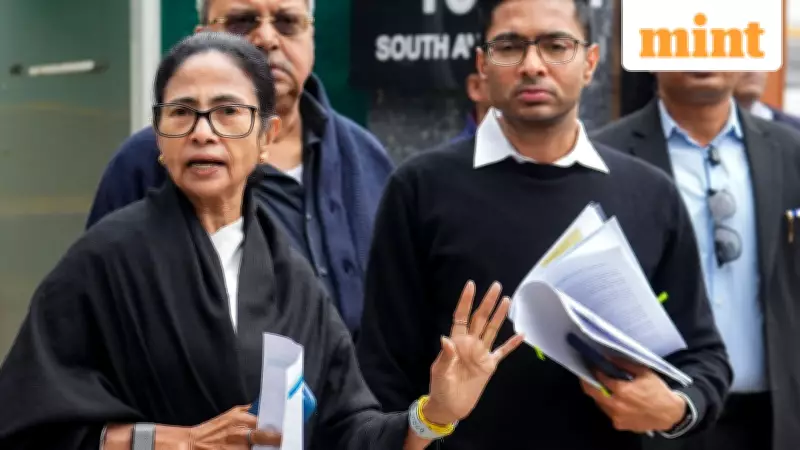
Supreme Court Hears Petitions Challenging West Bengal Electoral Roll Revision
The Supreme Court of India is currently conducting a hearing on petitions that challenge the Special Intensive Revision (SIR) of electoral rolls being implemented in the state of West Bengal. This legal proceeding has garnered significant attention due to its potential impact on the electoral process in the region.
Bench Composition and Proceedings
A three-judge bench, presided over by Chief Justice of India (CJI) Surya Kant and including Justices Joymalya Bagchi and NV Anjaria, is hearing the matter. The bench is meticulously examining the arguments presented by various parties involved in the case.
According to reports from Bar and Bench, the hearing is focused on the legality and procedural aspects of the SIR exercise, which aims to update and verify voter lists in West Bengal.

Mamata Banerjee's Personal Appearance
In a notable development, West Bengal Chief Minister Mamata Banerjee appeared in person before the Supreme Court on Wednesday to present her petition regarding the electoral roll revision. Her direct involvement underscores the political significance and urgency attached to this issue.
Banerjee's petition likely raises concerns about the fairness and transparency of the SIR process, arguing that it may affect the democratic rights of voters in the state.
Key Points of Contention
- The petitioners are challenging the Special Intensive Revision of electoral rolls in West Bengal.
- The bench is evaluating whether the SIR adheres to constitutional and electoral laws.
- Chief Minister Mamata Banerjee's personal appearance highlights the case's political ramifications.
- The outcome could influence future electoral preparations and voter registration processes in India.
As the hearing progresses, all live updates from the Supreme Court proceedings are being closely monitored by legal experts, political analysts, and the public. The court's decision is expected to have far-reaching implications for electoral integrity and governance in West Bengal.






