

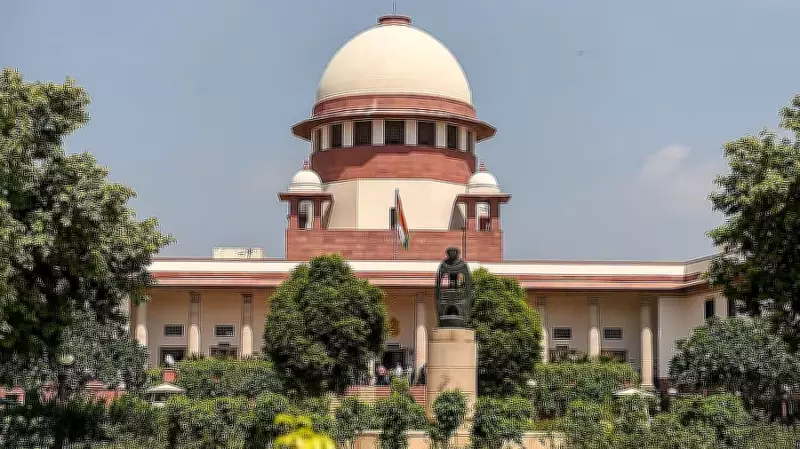
The Supreme Court of India has declared that homemakers are nation builders, stating that their unpaid domestic work is worth at least Rs 30,000 per month. A bench comprising Justices Sanjay Karol and N Kotiswar Singh emphasized that a homemaker contributes not only to the family but also to the progress of the nation by nurturing human capital and enabling other family members to pursue education and livelihoods.
Landmark Observation on Homemakers' Contribution
The court made these observations while hearing a case related to compensation in a motor accident claim. The bench noted that the work of a homemaker often goes unrecognized and undervalued in economic terms. It said that the contribution of a homemaker is immense and should be quantified appropriately. The court suggested that the notional income of a homemaker should be at least Rs 30,000 per month for the purpose of calculating compensation in cases of death or disability.
Recognizing Unpaid Labor
The Supreme Court highlighted that homemakers perform a variety of tasks, including cooking, cleaning, childcare, and elder care, which would otherwise require paid help. The bench stated that the value of this work should not be underestimated. It added that homemakers often work longer hours than formal employees, yet their work remains invisible in economic statistics. The court called for a broader societal recognition of the economic value of domestic work.

Implications for Legal Compensation
The ruling is expected to have significant implications for legal compensation in cases involving homemakers. The court directed that while calculating compensation for the death or injury of a homemaker, tribunals and courts should consider the notional income of Rs 30,000 per month. This would ensure that families are adequately compensated for the loss of a homemaker's services. The bench also stressed that the value of homemakers' work should be revised periodically to reflect inflation and changing economic conditions.
Reactions and Broader Impact
The judgment has been welcomed by women's rights activists and legal experts. They see it as a progressive step towards recognizing the economic contribution of women in the informal sector. Many believe that this ruling will help in changing societal attitudes towards domestic work and gender roles. The court's observation that homemakers are nation builders is seen as a powerful statement that challenges traditional notions of work and productivity.
The Supreme Court's decision also aligns with global efforts to measure unpaid care work and include it in national accounts. The International Labour Organization (ILO) has long advocated for the recognition of unpaid work. In many countries, women perform the majority of unpaid care work, which remains undervalued. This ruling could serve as a precedent for other jurisdictions to follow.
In conclusion, the Supreme Court's observation that homemakers are nation builders and their work is worth at least Rs 30,000 per month marks a significant step in acknowledging the economic value of unpaid domestic labor. The ruling is expected to influence legal compensation and societal perceptions, highlighting the crucial role of homemakers in nation-building.






