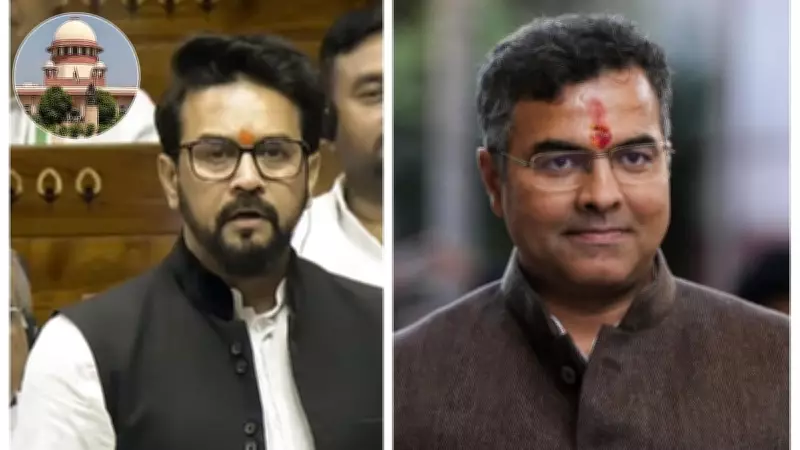
The Supreme Court of India has ruled that no cognisable offence is made out against BJP leaders Anurag Thakur and Parvesh Verma in connection with a hate speech controversy. The court affirmed the findings of the Delhi High Court, which had earlier determined that the remarks made by the two politicians did not incite communal violence or public disorder.
Background of the Case
The case stemmed from speeches delivered by Thakur and Verma during election rallies in 2020. Allegations were raised that their statements were inflammatory and could potentially disturb communal harmony. However, both leaders maintained that their comments were taken out of context and were not intended to incite hatred or violence.
Delhi High Court's Stand
The Delhi High Court had previously examined the matter and concluded that the speeches did not meet the threshold for constituting a cognisable offence. The court observed that the remarks were made in the heat of political campaigning and were not part of a deliberate attempt to disrupt public order.

Supreme Court's Verdict
A bench of the Supreme Court, while hearing the appeal against the High Court's order, concurred with the lower court's assessment. The bench stated that the content of the speeches, when viewed in their entirety, did not exhibit the requisite intent to incite violence or create communal tension. The court emphasised that while political speech must be responsible, not every controversial statement warrants criminal prosecution.
The Supreme Court's decision is significant as it sets a precedent for evaluating hate speech cases in the context of political discourse. The court noted that the freedom of speech and expression, as guaranteed under Article 19(1)(a) of the Constitution, allows for robust debate, even if it includes sharp criticism. However, it cautioned that this freedom is not absolute and must be exercised within the bounds of law.
Reactions and Implications
The verdict has drawn mixed reactions. Supporters of the BJP leaders have welcomed the decision, asserting that it vindicates their stance. Critics, however, argue that the ruling could embolden politicians to make inflammatory remarks without fear of legal consequences. Legal experts have pointed out that the judgment underscores the need for a clear distinction between hate speech and legitimate political expression.
The case has also reignited discussions about the effectiveness of existing laws in curbing hate speech. While the Supreme Court has provided clarity in this instance, the broader challenge of balancing free speech with social harmony remains a contentious issue in Indian jurisprudence.