

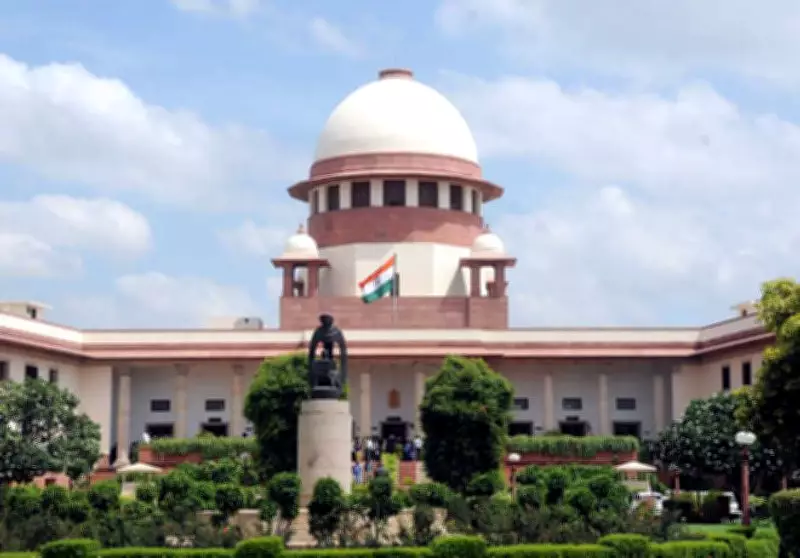
The Supreme Court of India has invoked the ancient text Manusmriti to reinforce its stance against female foeticide, emphasizing the need for stringent enforcement of the Pre-Conception and Pre-Natal Diagnostic Techniques (Prohibition of Sex Selection) Act, commonly known as the PCPNDT Act. A bench comprising Justice Sanjay Karol and Justice Prashant Kumar Mishra highlighted that despite some progress, deep-seated patriarchal preferences for male children persist, leading to ongoing sex-selection practices.
Manusmriti and Poetic Reference
The bench quoted the famous shloka from Manusmriti: "Yatra naryastu pujyante ramante tatra devata," which translates to "where women are honoured, divinity blossoms." This was used to underscore the cultural and spiritual importance of respecting women. Additionally, the court referred to a poem by Subhadra Kumari Chauhan titled 'Balika ka Parichay,' which celebrates the joy of a mother upon the birth of a daughter.
Data on Child Sex Ratio
The court noted that Census data reveals a decline in the national child sex ratio from 945 in 1991 to 927 in 2001 and further to 919 in 2011. While a partial recovery to 929 at birth signals some improvement, the bench stressed that this is not indicative of true equality. States like Haryana and Punjab, which recorded child sex ratios below 900 after the turn of the century, have shown improvement due to regulatory enforcement and awareness campaigns. However, several states still report sex ratios at birth below the national average, indicating the continued prevalence of sex-selection practices.

Strict Enforcement Needed
Dismissing an appeal by a Maharashtra doctor challenging cognizance under Section 23 of the PCPNDT Act, the bench stated that while the declining sex ratio issue has improved, diluting legal provisions or ignoring violations cannot be allowed. The current scenario is a result of sustained efforts by central and state governments, but more than 75 years after independence, posters advocating for girl child education and financial security remain common in cities like Delhi.
Government Schemes and Future Outlook
The court acknowledged various schemes such as Beti Bachao Beti Padhao, Janani Suraksha Yojana, and Ladli Lakshmi Yojana, which aim to eradicate systemic bias against girls. However, it emphasized that strict enforcement of the PCPNDT Act remains essential until there is a widespread change in mentality, replacing the perceived 'inherent weakness' of women with true equality. The bench concluded that while laws protecting women will always be necessary, the fundamental question of whether a girl child deserves to be born should no longer exist.
The Supreme Court's remarks come as a reminder of the ongoing battle against female foeticide and the need for collective societal change to ensure gender equality.






