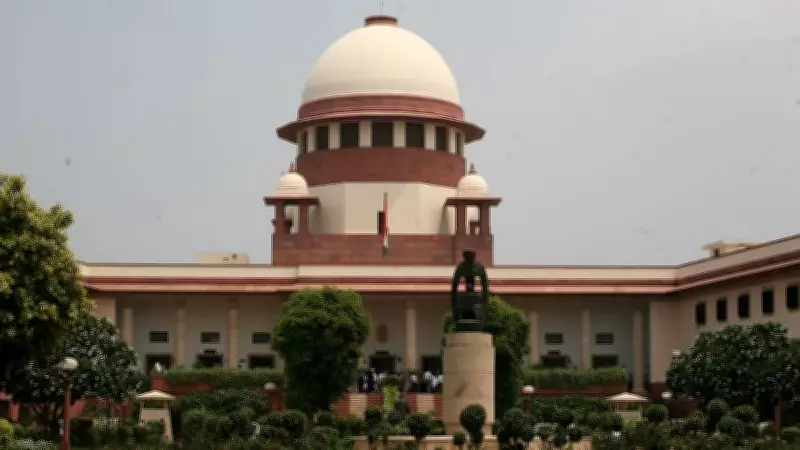
Supreme Court Issues Stern Rebuke to States Over 'Freebie Culture'
The Supreme Court of India has delivered a sharp critique of state governments across the country, expressing deep concern over the proliferation of what it termed a 'freebie culture'. A bench comprising Chief Justice of India Surya Kant and Justices Joymalya Bagchi and Vipul M Pancholi voiced strong disapproval during recent proceedings, highlighting the fiscal irresponsibility of such practices.
Judicial Concern Over Revenue Deficits and Development
The bench lamented the widespread trend, stating, "Most of the states in the country are revenue-deficit states and yet they are offering such freebies overlooking development…". This observation underscores the court's apprehension about states prioritizing populist measures over essential developmental projects. The justices emphasized that many states are operating with significant revenue shortfalls, yet continue to announce and implement various free schemes and subsidies.
The timing of this judicial commentary is particularly noteworthy, as it comes amid heightened political activity and electoral preparations. The court's remarks implicitly question the sustainability and long-term impact of such policies on India's economic health and governance standards.

Broader Implications for Governance and Economy
This judicial intervention raises critical questions about fiscal discipline and responsible governance. The Supreme Court's stance suggests a growing judicial awareness of the economic consequences of populist policies. By highlighting the contradiction between revenue deficits and freebie offerings, the bench is urging state administrations to reconsider their policy frameworks.
The court's comments also touch upon the broader debate about the role of welfare measures versus developmental investments. While social support systems are essential, the judiciary appears to be cautioning against short-term political gains at the expense of long-term economic stability and infrastructure development.
This development is likely to spark further discussions among policymakers, economists, and political analysts about the balance between electoral promises and fiscal prudence in India's democratic framework.