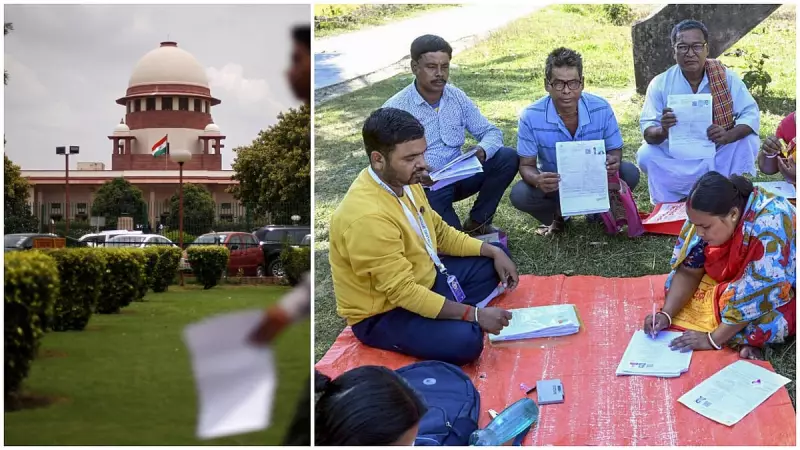
The Supreme Court of India has issued a significant directive to the Election Commission of India, emphasizing that the Supplementary Integrated Revision (SIR) process must be conducted with utmost justice and fairness. This instruction comes in response to concerns raised about the integrity of electoral rolls in certain regions.
Election Commission's Affidavit Reveals Discrepancies
In a detailed affidavit submitted to the court, the Election Commission acknowledged the presence of numerous logical discrepancies within the electoral roll of West Bengal. The commission stated that these irregularities are so profound that they defy scientific explanation, highlighting potential flaws in the data collection or verification processes.
Judicial Scrutiny and Electoral Integrity
The Supreme Court's intervention underscores the judiciary's role in safeguarding democratic processes. By calling for a just and fair SIR process, the court aims to ensure that electoral rolls are accurate, transparent, and free from manipulation, which is crucial for upholding the principles of free and fair elections in India.

Implications for West Bengal and Beyond
The specific mention of West Bengal's electoral rolls brings attention to regional challenges in maintaining electoral integrity. However, this directive has broader implications, as it sets a precedent for how electoral processes should be managed across all states to prevent similar discrepancies and uphold public trust in the electoral system.
As the Election Commission works to address these issues, this case serves as a reminder of the ongoing need for vigilance and reform in electoral administration to strengthen India's democracy.