

Political Storm Over Shivaji-Tipu Comparison: BJP Demands Congress Leader's Resignation
A major political confrontation has erupted over an alleged comparison between the legendary Maratha warrior Chhatrapati Shivaji Maharaj and the 18th-century Mysore ruler Tipu Sultan, escalating tensions between political parties and sparking protests across Maharashtra. The controversy has drawn in leaders from multiple states and shows no signs of abating as historical interpretations become a flashpoint for contemporary political battles.
BJP's Strong Demands and Protests
Revenue Minister Chandrashekhar Bawankule has urged Leader of Opposition in Lok Sabha Rahul Gandhi to immediately seek an explanation from Maharashtra Pradesh Congress Committee (MPCC) chief Harshwardhan Sapkal and demand his resignation without delay. Bawankule called the alleged comparison "an affront to Shivaji Maharaj's legacy" and stated that such remarks are completely unacceptable and insulting to the revered historical figure.
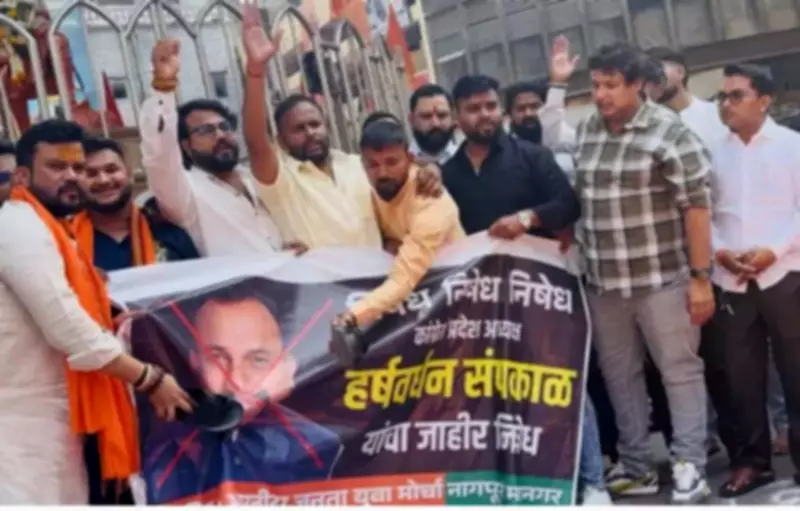
In Nagpur and other parts of Maharashtra, BJP workers staged protests, raising slogans and demanding an apology from Sapkal. Some protesters went as far as striking Sapkal's posters with shoes in a dramatic display of their anger over the perceived insult to Shivaji Maharaj. Bawankule emphasized that silence from the Congress leadership on this matter would amount to tacit approval of the controversial remarks.

Owaisi's Defense of Tipu Sultan
The dispute widened significantly when AIMIM chief Asaduddin Owaisi entered the fray with a strong defense of Tipu Sultan. "In 1799, Tipu Sultan died fighting the British," Owaisi stated. "He did not sit in jail and write love letters to the British." The Hyderabad MP added that the British feared Tipu even after his death, claiming his body lay for over an hour as soldiers hesitated to approach it.
Owaisi also questioned Maharashtra Chief Minister Devendra Fadnavis, who had criticized Sapkal on Saturday for comparing the two historical figures. The AIMIM leader pointed out that a ring associated with Tipu bore the name "Ram" and referenced a 2014 auction in Britain. He cited former President APJ Abdul Kalam's writing on rocket technology and argued that Tipu supported Hindu-Muslim unity, pointing to historical accounts of assistance to the Sringeri Mutt. "BJP is spreading only hatred," Owaisi concluded.
BJP's Counterarguments and Historical Claims
Telangana BJP president N Ramchander Rao strongly rejected Owaisi's assertions, stating that "by glorifying Tipu Sultan, the AIMIM is distorting history." Rao alleged that Tipu persecuted Hindus in parts of Karnataka and Mysore and dismissed claims that Vinayak Damodar Savarkar sought British clemency as false. "India will never accept such a distorted history," Rao declared emphatically.
Bawankule reiterated that Sapkal's alleged comparison has hurt public sentiment and called for accountability. The minister questioned the stand of leaders in the Maha Vikas Aghadi alliance, particularly Uddhav Thackeray. Rather than "accepting helplessness," Bawankule suggested that Thackeray should reconsider remaining in the alliance if such remarks were being tolerated.
Personal Attacks and Broader Implications
In a sharp personal attack, Bawankule stated that Sapkal's remarks reflected poor judgement and that such a leader should not continue in office. He alleged that if Congress workers defend the statement, "the entire Congress party is insulting Chhatrapati Shivaji Maharaj." The minister also referred to past controversies involving remarks on Shivaji Maharaj and Vinayak Damodar Savarkar, calling repeated disputes over historical figures "a serious matter" that requires careful consideration.

Congress Response and Ongoing Controversy
Congress has not issued a detailed clarification on the matter so far, though party sources indicate that internal discussions are underway amid mounting political pressure. With demonstrations spreading across Maharashtra and leaders from multiple parties trading charges over historical interpretation, the controversy shows no sign of abating. The incident highlights how historical figures continue to serve as potent symbols in contemporary Indian politics, with competing narratives about the past becoming weapons in present-day political battles.
The escalating row has brought several critical questions to the forefront:
- How should historical figures be discussed in contemporary political discourse?
- What constitutes appropriate respect for revered national icons?
- How do competing historical interpretations reflect broader political divisions?
- What responsibility do political leaders have when discussing sensitive historical topics?
As the controversy continues to unfold, it remains to be seen how Congress will respond to the mounting pressure and whether the political storm will lead to significant consequences for those involved in the debate over these two iconic historical figures.





