

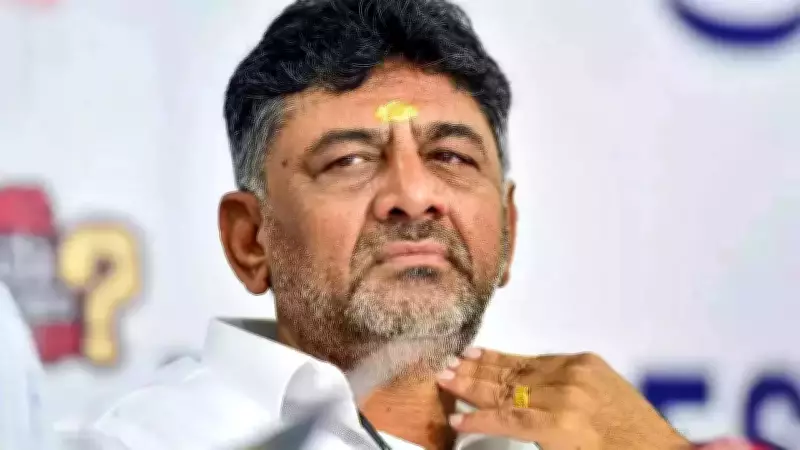
DK Shivakumar Shares Profound Reflections on Tihar Jail Experience and Political Journey
Certain moments in public life leave an indelible mark, reshaping one's perspective on politics and reaffirming the core reasons for entering public service. For Karnataka Deputy Chief Minister and Congress leader DK Shivakumar, one such defining period was his fifty-day incarceration in Tihar Jail in September 2019.
Life Behind Bars: A Time for Silence and Reflection
In Tihar Jail, the constant noise of public life—meetings, phone calls, and entourages—vanished, replaced by profound silence and ample time for introspection. Shivakumar describes this as a period where, stripped of familiar comforts, he gained a unique clarity and deeper insights into his role and responsibilities.
A Memorable Visit: Sonia Gandhi's Gesture of Loyalty
One incident from those days remains vividly etched in his memory: the visit of Congress leader Sonia Gandhi. Without any media fanfare, she came to Tihar Jail solely to check on his well-being and offer strength. This act of loyalty, Shivakumar emphasizes, exemplifies the true meaning of standing by one's organization through tough times, and in return, receiving support when most needed.

Lessons from Political Mentors and Early Career
Shivakumar's political education began early, shaped by interactions with stalwarts like former Prime Minister Rajiv Gandhi. As a young party worker, he was given the opportunity to candidly discuss Karnataka's political turmoil and party leadership with Rajiv Gandhi, who later selected him to represent the Youth Congress in Korea. This experience taught him the importance of open and accessible leadership.
Similarly, former Chief Minister S. Bangarappa's practice of empowering younger leaders instilled in Shivakumar the value of listening and operating beyond rigid hierarchies. These lessons became foundational as he ascended the political ladder.
Rebuilding the Karnataka Congress: A Strategic Overhaul
Upon becoming President of the Karnataka Pradesh Congress Committee in March 2020, Shivakumar prioritized continuity in openness, accessibility, and merit. Despite the onset of the COVID-19 lockdown, efforts to strengthen the party persisted. Digital connectivity enabled relief distribution to over one crore households within thirty days, showcasing innovative political outreach during crisis.
As restrictions eased, he embarked on a systematic organizational rebuild. Key initiatives included:
- Reviewing and strengthening booth committees.
- Reorganizing district units for better efficiency.
- Improving communication across party structures.
- Digitizing membership to ensure transparency, resulting in nearly 78 lakh digital enrolments in under 180 days—one of India's largest membership drives.
Decentralization of power and inclusion of younger leaders further revitalized internal dynamics, fostering a renewed sense of connection among cadres.
Leading to Victory: The 2023 Election Strategy
Shivakumar's strategic plan for the 2023 elections focused on addressing core public welfare issues. The Congress highlighted concerns like corruption, notably the allegations of a 40 percent commission, across political and social platforms. Social justice guarantees were extended to marginalized communities, positioning the party as a people-centric force.
Public mobilization efforts, such as the Mekedatu padayatra for water security and the successful Karnataka leg of the Bharat Jodo Yatra, demonstrated robust organizational prowess and widespread citizen support. This collective momentum culminated in a decisive electoral victory, reinforcing the Congress's role in Karnataka's political landscape.
Upholding Democratic Values in a Divisive Era
In an era marked by divisive narratives like Congress Mukt Bharat, Shivakumar asserts that the Karnataka Congress has stood as a vanguard for democracy and public voice. Rebuilding the party over six years required patience and steady effort, proving that growth stems from committed workers and public trust, not mere slogans.
For Shivakumar, the Congress is more than a political platform; it has shaped his identity, taught him to serve people, and remains his lifelong avenue for public service.






