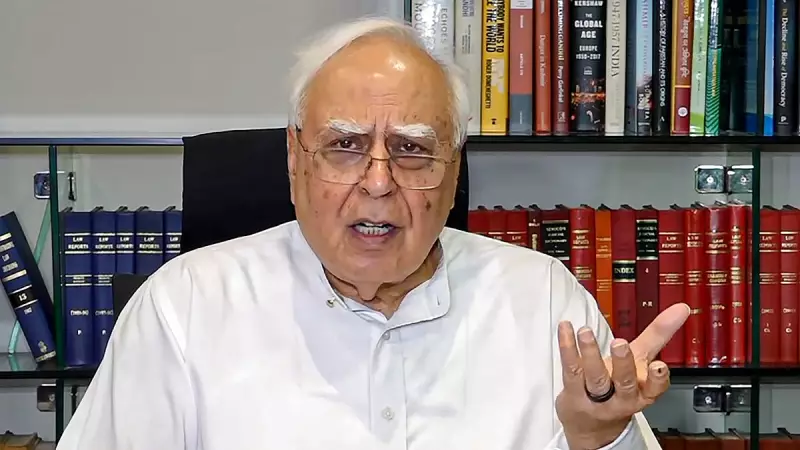
Senior advocate and Rajya Sabha MP Kapil Sibal launched a sharp critique against the Union government on Monday, questioning whether the reported deaths of electoral officials were an acceptable consequence of administrative processes. His pointed remarks came in the wake of a tragic incident in West Bengal, casting a spotlight on the immense pressure faced by ground-level election staff.
Tragedy in Bankura Sparks Political Row
Sibal's intervention was prompted by a distressing event in Bankura district, West Bengal, where a Booth Level Officer (BLO) was found dead on 28 December 2025. Preliminary reports and local allegations suggest that the intense work pressure associated with the ongoing Special Intensive Revision (SIR 2.0) of electoral rolls may have been a contributing factor in the official's demise. The SIR 2.0 is a nationwide drive initiated by the Election Commission of India to update voter lists meticulously.
"Is Death of 33 BLOs Okay?": Sibal's Scathing Query
Taking to a public platform, Kapil Sibal did not mince words. He framed his critique around a haunting question directed at the ruling dispensation. "Is the death of 33 BLOs okay?" he asked, implying a pattern of casualties linked to the demanding revision exercise. While the exact figure and verification of such numbers were part of his rhetorical challenge, his core accusation was clear: he blamed the government for creating an environment of excessive strain that endangers the well-being of officials executing critical democratic duties.

By referencing a specific number, Sibal sought to elevate the incident from an isolated tragedy to a potential systemic issue. His comments immediately fueled a political debate, with opposition voices rallying to question the human cost of the administrative push for electoral accuracy.
Broader Implications for Electoral Machinery
This incident and the subsequent political firestorm have brought the working conditions of BLOs—the foundational pillars of the election machinery—into sharp focus. These officials, often working with limited resources and under tight deadlines, are responsible for door-to-door verification and ensuring the integrity of the voter list.
The Special Intensive Revision (SIR 2.0) is a crucial process for cleansing the electoral roll, but Sibal's allegations raise serious concerns about its implementation. The key questions now being debated are:
- Are ground-level staff being provided adequate support and realistic timelines?
- What mechanisms exist for their stress management and welfare?
- How can the essential work of democracy be conducted without compromising the health of those who serve it?
The Union government is yet to issue a detailed official response to Sibal's specific allegations. However, the tragedy in Bankura has undoubtedly intensified scrutiny on the human element behind large-scale governmental exercises, balancing administrative goals with duty of care. The coming days are likely to see increased demands for a formal inquiry and a review of work protocols for BLOs across the country.