

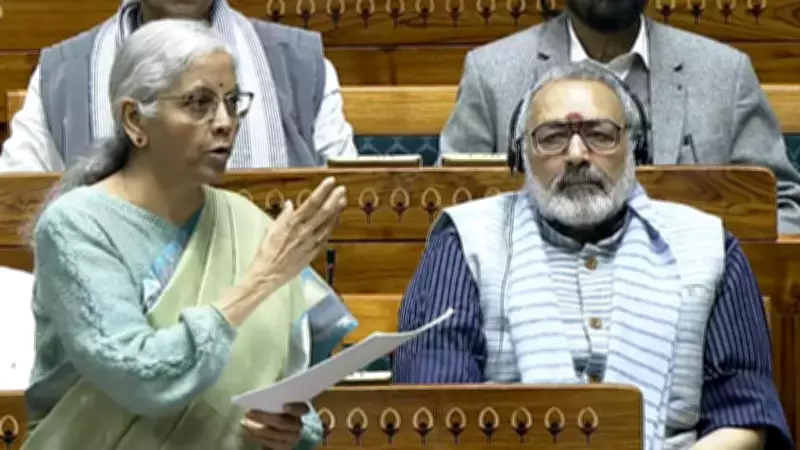
Sitharaman Condemns Law and Order Situation in West Bengal
Union Finance Minister Nirmala Sitharaman launched a sharp critique against West Bengal Chief Minister Mamata Banerjee on Wednesday, addressing the deteriorating law and order in the poll-bound state. Speaking during a debate on the Union Budget 2026 in the Lok Sabha, Sitharaman asserted that under Banerjee's administration, bombs have taken precedence over the rule of law.
"Bombs Prevail, Not Law" in Bengal
In a statement that sparked uproar among opposition leaders, Sitharaman declared, "Bengal mein bomb chalta hai, kanun nahi chalta", translating to "in Bengal, it is bombs that prevail, not the law". She expressed frustration over the Chief Minister's approach to public safety, particularly highlighting Banerjee's advice for women to stay indoors during evenings instead of implementing measures to enhance security.
Reference to Kaliganj Bomb Blast
Sitharaman pointed to a tragic incident in June 2025, where a bomb blast in Kaliganj resulted in the loss of a child's life. She noted that a leader from the Trinamool Congress (TMC) was subsequently arrested in connection with the case, underscoring the severity of the security challenges facing the state.

Clarification on GST Misconceptions
Responding to remarks by TMC MP Abhishek Banerjee, Sitharaman accused him of misleading the House by claiming that Goods and Services Tax (GST) is levied on essential items such as milk, stationery, and education. She firmly rejected this assertion, clarifying that funeral services have never been taxed under the GST regime, countering his statement that GST applies even in death.
Budget Proposals for West Bengal
Despite the criticism, Sitharaman emphasized that the Union Budget includes several proposals in which the West Bengal government can actively participate to advance the state's interests. She encouraged collaboration to foster development and address regional concerns.
Election Context
West Bengal is scheduled to head to the polls in the coming months, adding political significance to the debate. The exchange highlights ongoing tensions between the central government and the state administration over governance and security issues.
The discussion in Parliament reflects broader concerns about safety and economic policies as the election season approaches, with both sides presenting contrasting views on progress and challenges in the region.






