

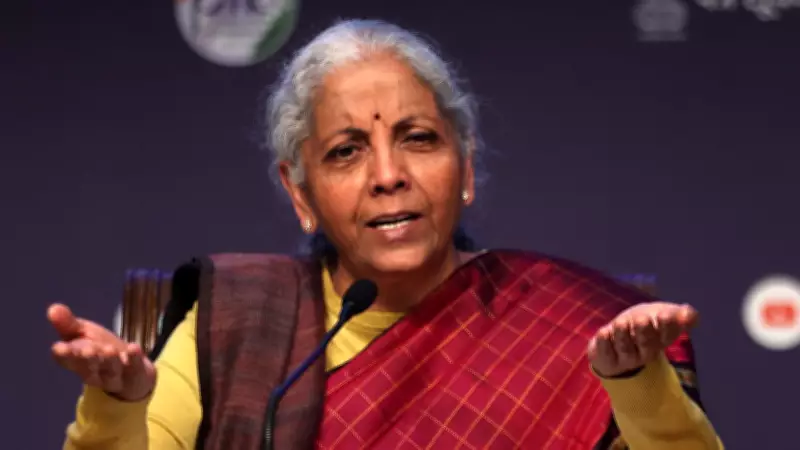
Finance Minister Nirmala Sitharaman Addresses Controversy Over General Naravane's Unpublished Memoir
In a detailed interview with The Indian Express, Union Finance Minister Nirmala Sitharaman has strongly defended the government's position regarding former Army chief General MM Naravane, whose unpublished book Four Stars of Destiny became a focal point of political contention during the recent Budget Session of Parliament. Sitharaman emphasized that the government holds no issues with General Naravane, a highly respected senior officer who served as Chief of Army Staff during the NDA's first term.
Government Respects General Naravane, Says Sitharaman
Sitharaman stated clearly, "When I had a short stint as Defence Minister, I knew General Naravane, a very respected senior general. Why will the government of India have any problem with a General who's been made the Chief of Army Staff under our period. We respect him. We have no issues about him." The Finance Minister served as Defence Minister from September 2017 to May 2019, during which time she worked closely with military leadership.
Regarding the book itself, Sitharaman clarified that it has not been banned by the government. She explained, "The publishers might have sent the book for defence ministry clearance which is not yet given," indicating that standard procedural reviews are still underway rather than any political obstruction.

Rahul Gandhi's Parliamentary Tactics Criticized
The controversy erupted when Leader of Opposition Rahul Gandhi displayed a copy of General Naravane's unpublished memoir during parliamentary proceedings, using it to target the government over military handling of the August 2020 Ladakh face-off with China. Sitharaman accused Gandhi of exploiting the General's reputation for political gain.
"You wanted to draw attention using a respected General's name. You quote his name and mock," Sitharaman asserted, highlighting what she described as inappropriate parliamentary conduct. She further criticized the Congress party for deploying women MPs with banners and posters toward Treasury benches as a tactical maneuver, questioning the strategy behind using female members in such a manner during legislative proceedings.
Contrasting Leadership Approaches
Sitharaman drew sharp comparisons between current political discourse and historical precedents, particularly referencing Prime Minister Narendra Modi's instructions to the Armed Forces as quoted in General Naravane's book: "jo uchhit samjho woh karo (Do whatever you deem is appropriate)."
"The Prime Minister gave a blank cheque to the Armed Forces. What more do you want to say?" Sitharaman asked rhetorically. "It's not like (Pandit) Nehru saying, 'Arunachalis, you take care of yourself.' Or over Ladakh, not a blade of grass grows." These remarks reference historical criticisms of Jawaharlal Nehru's handling of border disputes with China.
Interestingly, Sitharaman also invoked Nehru's parliamentary conduct as an example for contemporary opposition leaders to follow. She noted that despite having bitter critics like H.V. Kamath, Nehru expressed regret when Kamath lost an election, demonstrating respect for political adversaries even in disagreement.
Broader Critique of Opposition Strategy
The Finance Minister delivered a comprehensive critique of what she characterized as irresponsible opposition behavior. "We want an Opposition that stands up and asks us questions. We will answer all of them," Sitharaman stated. "But it should be within the niyam kanoon (rules and regulations) of the House. You ask questions and when the Prime Minister stands up to answer, you run away, calling names... You cannot have a raita failao and bhag jao approach (mess up things and run away). That's not democracy."
Sitharaman suggested that Gandhi's reference to General Naravane's unpublished work represented what she called a "Freudian slip that betrayed his intention," indicating deeper political motivations behind the parliamentary display. She urged opposition members to operate within established parliamentary norms while engaging in substantive policy debates rather than theatrical demonstrations.

The interview reveals ongoing tensions between government and opposition regarding national security narratives, parliamentary decorum, and historical interpretations of border policy. As the political discourse continues to evolve, Sitharaman's remarks underscore the government's commitment to defending its military record while calling for more disciplined opposition engagement in democratic institutions.





