

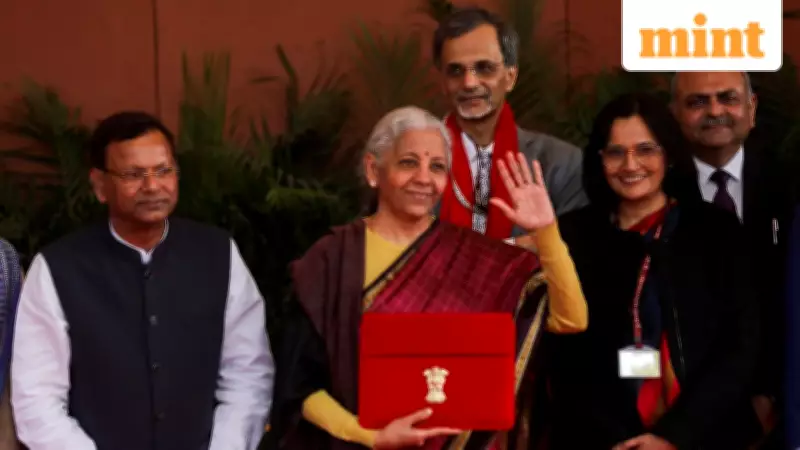
Nirmala Sitharaman Makes History with Ninth Consecutive Union Budget Presentation
Union Finance Minister Nirmala Sitharaman is poised to create a remarkable milestone in Indian fiscal history as she prepares to present the Union Budget for the financial year 2026-27. This presentation, scheduled for Sunday in the Lok Sabha, will mark her ninth consecutive budget, establishing an unprecedented record among all finance ministers since India's independence. The budget represents a comprehensive economic blueprint for the nation, crafted through meticulous planning and collaboration among top government officials.
The Dedicated Team Behind the Scenes of Union Budget 2026-27
While the finance minister takes center stage during the budget presentation, a dedicated team of senior officials works tirelessly behind the scenes to shape and refine this crucial document. These professionals bring their expertise to various aspects of economic policy, ensuring the budget addresses both immediate needs and long-term strategic goals. Their collective efforts transform policy visions into actionable financial plans that impact millions of citizens across the country.
Chief Economic Adviser: V Anantha Nageswaran
V Anantha Nageswaran, serving as the 18th Chief Economic Adviser to the Government of India, stands as one of the most influential figures in the budget preparation process. Since his appointment in January 2022, Nageswaran has consistently provided crucial economic guidance to Finance Minister Sitharaman. His responsibilities include preparing the Economic Survey, a detailed analysis of the nation's economic performance presented in Parliament just before the budget. With his term extending until March 2027, his insights continue to shape fiscal policy direction.

Economic Affairs Secretary: Anuradha Thakur
Anuradha Thakur, as Economic Affairs Secretary, plays a pivotal role in giving structural form to the Union Budget. Leading the Budget Division, she oversees the drafting of India's macroeconomic strategy and the core budget documents. Her work ensures coherence between various economic policies and their financial implementation, making her contribution fundamental to the budget's overall framework and effectiveness.
Revenue Secretary: Arvind Shrivastava
This budget marks the first presentation for Arvind Shrivastava in his capacity as Revenue Secretary. He shoulders the critical responsibility of formulating tax proposals within the budget, encompassing both direct taxes like income tax and indirect taxes such as GST. His department's work directly influences government revenue collection and taxpayer obligations, making his role essential for fiscal sustainability.
Expenditure Secretary: Vumlunmang Vualnam
Vumlunmang Vualnam, as Expenditure Secretary, manages the government's spending priorities and implementation mechanisms. His portfolio includes overseeing various welfare schemes, rationalizing subsidies, and controlling expenditure to maintain fiscal discipline. By carefully balancing spending needs with available resources, he plays a vital role in managing budget deficits and ensuring efficient use of public funds.
Financial Services Secretary: M Nagaraju
M Nagaraju heads the Department of Financial Services, overseeing public sector financial institutions including banks, insurance companies, and pension organizations. His department's responsibilities extend to social security programs, credit expansion initiatives, and financial inclusion efforts. By strengthening the financial sector's stability and accessibility, his work supports broader economic growth objectives embedded in the budget.
The collaborative efforts of these officials, under Finance Minister Sitharaman's leadership, demonstrate the complex machinery behind India's annual budget process. Their combined expertise in economics, revenue, expenditure, and financial services ensures that the Union Budget 2026-27 addresses both immediate economic challenges and long-term development goals, reflecting the government's commitment to sustainable growth and public welfare.






