

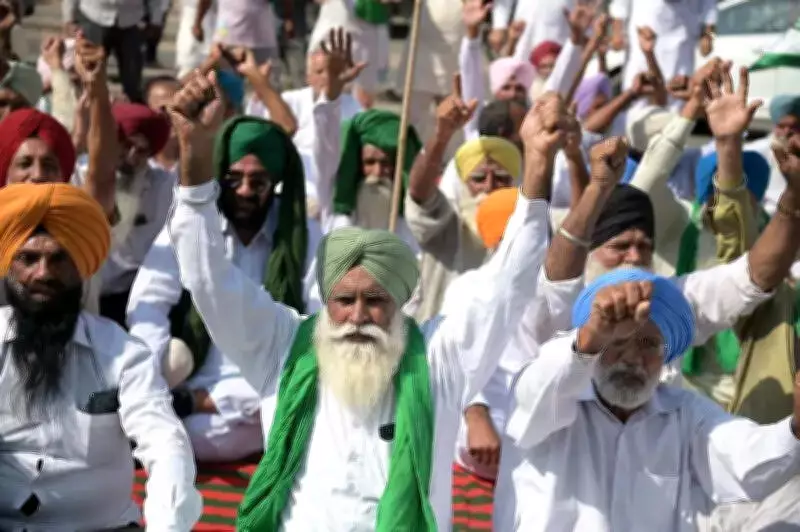
The Sanyukt Kisan Morcha (SKM) has announced plans to initiate a public movement across Punjab starting next month, addressing critical issues such as river-water sharing, control of dams, proposed defence bundhs along the border, and the potential inclusion of agriculture in the India-US trade agreement.
Meeting with Governor Planned
The farmers' body will first meet Punjab Governor Gulab Chand Kataria to submit a memorandum seeking central government intervention. SKM leaders stated that the agitation would be intensified in July if no constructive response is received.
Decision at SKM Meeting
The decision was finalized during an SKM meeting on Sunday. Last month, the outfit attempted to march to Punjab Bhawan from Mohali but was halted by police, who used lathicharge. The governor later invited SKM leaders for a meeting, which was postponed after some farmer leaders sustained injuries during the police action. The organization has now requested a fresh meeting time.

Concerns Over Water and Dams
SKM highlighted that Punjab, as a riparian state, is not receiving its fair share of river waters. It accused the Centre of gradually diluting the state's control over the Bhakra Beas Management Board (BBMB) and the Bhakra dam. With rapidly declining groundwater levels, SKM emphasized the need for greater canal water availability to reduce reliance on groundwater extraction.
Defence Bundhs and Flood Risks
The farmers' body also expressed concern about reports of defence bundhs construction in border areas, claiming these could obstruct natural river flow and increase flood risks during the monsoon, causing losses to farmers in low-lying regions.
Opposition to India-US Trade Deal
SKM opposed reports that agriculture and allied sectors might be included in the proposed India-US trade agreement. It argued that such a move would adversely affect Indian farmers, who would struggle to compete with heavily subsidized US agricultural producers.
The organization asserted that all these issues directly impact Punjab's farming sector and necessitate a broad-based public movement.






