

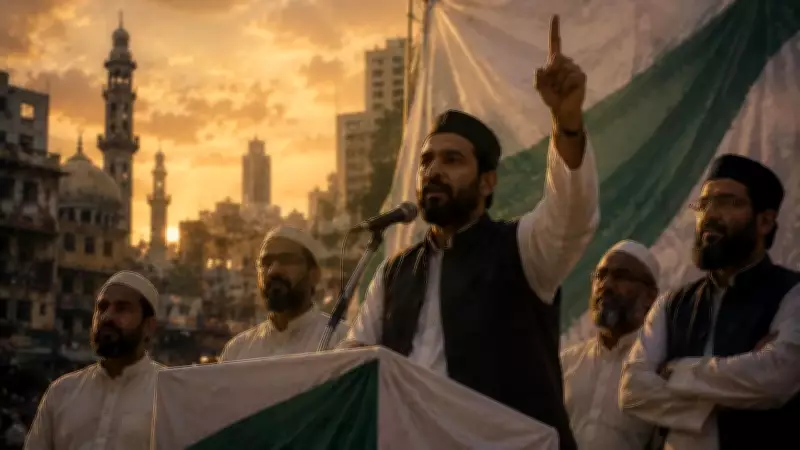
In recent months, a section of Muslim leaders and intellectuals in India has been advocating for the formation of a separate political party to represent the community's interests. This idea, while not new, has gained traction amid perceptions of growing marginalization and the failure of mainstream parties to address Muslim concerns. However, critics argue that such a move could backfire, leading to further isolation and polarization.
The Case for a Muslim Party
Proponents of a dedicated Muslim party point to the community's political underrepresentation. Despite comprising over 14% of India's population, Muslims hold only about 4% of Lok Sabha seats. They argue that existing parties, including the Congress and regional outfits, take Muslim votes for granted without delivering concrete benefits. A separate party, they believe, could negotiate better terms, push for policy changes on issues like education, employment, and religious freedom, and provide a unified voice in Parliament.
Historical precedents exist, such as the Indian Union Muslim League (IUML) in Kerala and the All India Majlis-E-Ittehadul Muslimeen (AIMIM) in Hyderabad, which have successfully represented local Muslim interests. However, these parties have limited regional reach. A national Muslim party could potentially replicate their success on a larger scale, especially in states with significant Muslim populations like Uttar Pradesh, Bihar, and West Bengal.

Potential Benefits
- Focused Agenda: A party exclusively devoted to Muslim issues could prioritize community-specific problems, such as discrimination in housing and jobs, the Citizenship Amendment Act (CAA), and the National Register of Citizens (NRC).
- Political Bargaining Power: A bloc of Muslim MPs could influence coalition governments and extract concessions, similar to how regional parties represent linguistic or caste groups.
- Empowerment: A separate party could foster political leadership within the community and reduce dependence on other parties.
The Case Against a Separate Party
Opponents warn that a Muslim party could exacerbate communal divides in an already polarized political environment. India's secular fabric, they argue, is best served by parties that represent all citizens, not just one religious group. A Muslim party might be branded as 'communal' and face hostility from Hindu nationalist forces, further alienating the community.
Moreover, internal divisions among Muslims—by sect (Sunni, Shia, etc.), caste (e.g., Pasmanda Muslims), and class—could hamper unity. The Pasmanda movement, representing lower-caste Muslims, has often criticized upper-caste Muslim leadership for dominating community discourse. A single party might not adequately address these internal disparities.
Historical Lessons
Past attempts at forming Muslim parties have had mixed results. The All India Muslim League, which led to the creation of Pakistan, is a cautionary tale of how religious politics can lead to partition. In independent India, the Muslim League (IUML) has remained a Kerala-centric party, while the AIMIM has expanded but still operates mainly in Hyderabad and a few other areas. Neither has become a national force.
Additionally, the Bharatiya Janata Party (BJP) has successfully co-opted some Muslim leaders and voters through welfare schemes and development rhetoric, though its core Hindu nationalist ideology remains a barrier. A separate Muslim party could push secular-minded Muslims away from the Congress and other secular parties, potentially benefiting the BJP by dividing the opposition vote.
Alternative Approaches
Some analysts suggest that instead of forming a separate party, Muslims should work within existing secular parties to increase their influence. This could involve supporting candidates who champion minority rights, building alliances with other marginalized groups (e.g., Dalits, OBCs), and focusing on grassroots mobilization. The idea of a 'Muslim vote bank' is already a reality in many constituencies, but it often benefits parties that do not prioritize Muslim interests once in power.

Another option is to strengthen civil society organizations and advocacy groups that can lobby for Muslim issues without entering electoral politics. Such groups can hold all parties accountable, regardless of who is in power.
Conclusion
The debate over a separate Muslim party reflects deeper anxieties about identity, representation, and security in contemporary India. While the desire for a political vehicle is understandable, the risks of further marginalization and communal tension are significant. Perhaps the answer lies not in a separate party but in a more assertive and strategic engagement with the existing political system, combined with internal community reforms. As India's democracy evolves, the Muslim community must find ways to amplify its voice without being boxed into a corner.





