Congress Demands Parliamentary Debate on India's Foreign Policy After Iran Attack
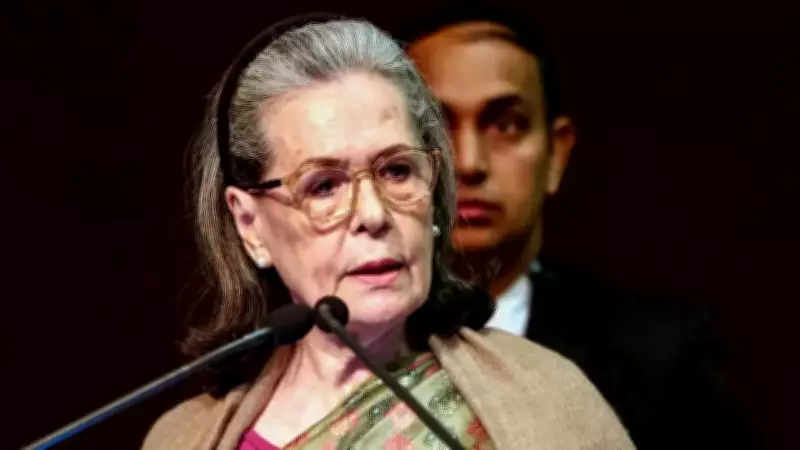
Congress Parliamentary Party Chairperson Sonia Gandhi has launched a sharp critique of the Narendra Modi-led government's response to recent military strikes in West Asia, specifically targeting what she termed its "deafening silence" on the attack against Iran's Supreme Leader Ayatollah Ali Khamenei. Gandhi asserted that this silence amounts to a "tacit endorsement" of the tragic events, and she has formally demanded that Parliament address this "glaring dissonance" in India's foreign policy when the Budget session resumes next week.
Opposition Prepares to Raise West Asia Crisis in Budget Session
Gandhi's statement signals the opposition's intent to vigorously raise the escalating West Asia conflict during the upcoming parliamentary proceedings. She emphasized that the assassination attempt on a sitting head of state, particularly amid ongoing diplomatic negotiations, represents a severe rupture in contemporary international relations and norms.
Echoing this sentiment, Leader of the Opposition Rahul Gandhi directly questioned Prime Minister Modi's position, asking whether he "supports the assassination of a head of state as a legitimate method to define the new world order." Rahul Gandhi urged the Prime Minister to break his silence, warning that continued quiet on such grave matters "significantly diminishes India's moral standing and credibility on the global stage."

Sonia Gandhi Questions Modi's Israel Visit and Iran Policy Shift
In a detailed media article, Sonia Gandhi connected recent developments, pointing to Prime Minister Modi's visit to Israel and his expressed "unconditional support" for the Benjamin Netanyahu government just two days prior to the coordinated US-Israel strikes on Iranian targets. She argued that this timing, coupled with what she described as the "abandonment of a longstanding ally like Iran," raises profound and serious questions about the consistency and strategic vision of India's foreign policy.
"Why would the nations of the Global South trust India to defend their territorial sovereignty and principles," Gandhi questioned, "when our own government appears unable or unwilling to uphold those very principles in its international conduct?" She stated that the current administration's attitude has sown deep doubts regarding the direction and overall credibility of India's foreign policy framework.
Call to Rediscover India's Foundational Values
Sonia Gandhi underscored an urgent need for the nation to "rediscover and reaffirm" the moral strength of the foundational values India has historically championed—sovereignty, peace, justice, and non-violence. She criticized the government for what she perceived as a selective condemnation, noting that while it ignored the massive initial attack on Iran, it was quick to condemn Iran's subsequent retaliatory strike on the United Arab Emirates without acknowledging the preceding sequence of events.
Highlighting India's unique diplomatic position, Gandhi noted that the country maintains significant relations with both Tehran and Tel Aviv, spanning critical sectors like defense, agriculture, and technology. This dual relationship, she argued, provides India with a distinct and responsible space to actively advocate for de-escalation and urge maximum restraint from all involved parties to prevent a wider regional conflagration.
The Congress leadership's forceful intervention sets the stage for a potentially heated debate in Parliament, focusing on India's role and responsibilities in a rapidly evolving and volatile international landscape, particularly concerning the West Asia conflict involving Israel, Iran, and the United States.