

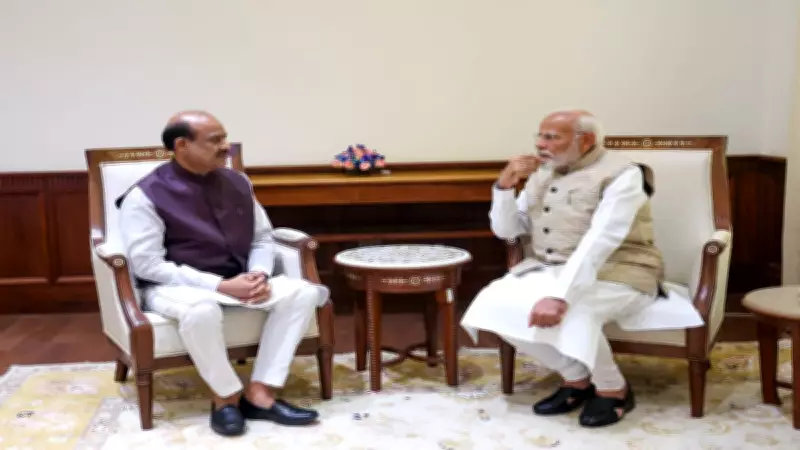
In a startling revelation that has sent shockwaves through India's political corridors, Lok Sabha Speaker Om Birla has disclosed a critical intervention during a recent parliamentary session. The Speaker revealed that he personally advised Prime Minister Narendra Modi to skip attending the Lok Sabha proceedings. This extraordinary recommendation came as Congress Members of Parliament created a highly charged atmosphere by surrounding the Prime Minister's designated chair in what has been described as an inappropriate incident.
Speaker's Protective Measure for Parliamentary Decorum
Speaker Om Birla, in his official capacity as the presiding officer of the lower house, took this unprecedented step to maintain the dignity and decorum of Parliament. The incident underscores the escalating tensions between the ruling party and the opposition, particularly the Congress party, which has been vocal in its criticism of government policies. Birla's decision to ask the Prime Minister to abstain from the session highlights the severity of the situation and his commitment to preventing any potential disruption that could undermine parliamentary proceedings.
Congress MPs' Aggressive Posture Creates Unprecedented Scenario
The Congress MPs' action of surrounding the Prime Minister's chair represents a significant departure from conventional parliamentary behavior. Such direct confrontation in the sanctum of the Lok Sabha is rare and has raised serious questions about opposition tactics. Political analysts suggest this move was likely a protest against specific government actions or policies, though the exact trigger remains subject to speculation. The incident has sparked a broader debate about the boundaries of legitimate protest within parliamentary institutions and the responsibilities of elected representatives.

Implications for Parliamentary Functioning and Political Discourse
This development has far-reaching implications for India's democratic processes. Firstly, it exposes the deepening rift between the government and the principal opposition party, potentially affecting legislative productivity. Secondly, it raises concerns about the security and protocol within Parliament, prompting calls for stricter enforcement of rules. Thirdly, the Speaker's proactive role in managing the situation demonstrates the importance of neutral arbiters in maintaining institutional integrity. The incident may lead to renewed discussions about parliamentary reforms and codes of conduct for MPs.
Broader Political Context and Reactions
The revelation comes amid a politically charged atmosphere in India, with ongoing debates over various national issues. Opposition parties, led by Congress, have frequently accused the government of bypassing parliamentary scrutiny, while the ruling party maintains that opposition tactics are obstructive. This incident is likely to fuel further polarization, with both sides using it to bolster their narratives. Public reaction has been mixed, with some viewing the Congress MPs' actions as a legitimate form of protest and others condemning it as disrespectful to parliamentary traditions.
Speaker Om Birla's disclosure has added a new dimension to India's political landscape, emphasizing the challenges in balancing robust debate with institutional respect. As the story unfolds, it will be crucial to monitor how this affects future parliamentary sessions and inter-party relations. The incident serves as a reminder of the delicate balance required in a vibrant democracy like India, where dissent must be expressed without compromising the sanctity of democratic institutions.






