

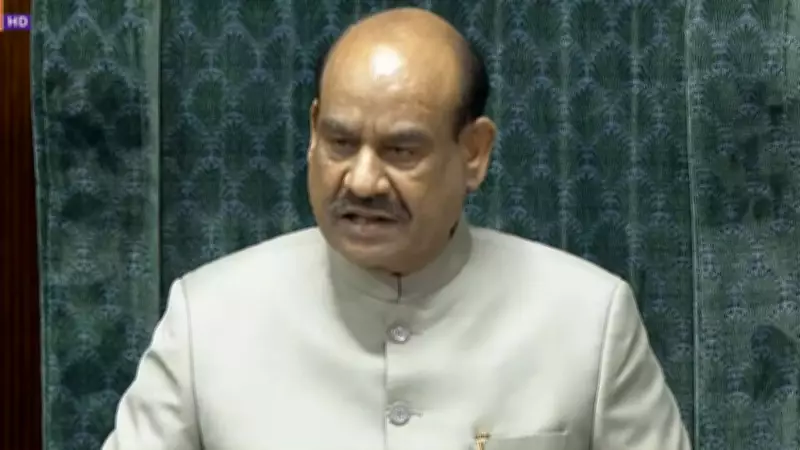
In a significant development from the Indian Parliament, Lok Sabha Speaker Om Birla disclosed on Thursday that he had personally advised Prime Minister Narendra Modi to refrain from attending the House session. This recommendation came amid serious apprehensions about potential disorder and security breaches that could have unfolded near the Prime Minister's designated chair.
Security Concerns Prompt Unprecedented Advice
Speaker Birla elaborated that his counsel was specifically timed for when Prime Minister Modi was scheduled to deliver his response to the debate on the Motion of Thanks to the President's Address. The Speaker received credible intelligence indicating that several Members of Parliament from the Congress party might have been planning to stage an inappropriate incident in close proximity to the Prime Minister's seat.
"When the Prime Minister was supposed to respond to the President's address in the House, I received information that several Congress MPs could have created an inappropriate incident near the Prime Minister's chair," Birla stated during his explanation. "If such an incident had occurred, it would have torn apart the democratic traditions of our country. To prevent this unfortunate scenario, I requested the Prime Minister not to come to the House."

Context of Parliamentary Disruptions
These revelations follow closely on the heels of Wednesday's parliamentary proceedings, where the Lok Sabha faced adjournment shortly after convening. The adjournment was necessitated by persistent protests from Opposition members who had congregated near the Prime Minister's seat and within the well of the House, creating an atmosphere of tension and disorder.
Speaker Birla emphasized that his decision was grounded in the prevailing chaotic conditions and the genuine possibility that parliamentary proceedings could deteriorate further if the House continued as originally planned. The continuous disruptions and potential security threats created an environment where conducting orderly business became increasingly challenging.
Political Reactions and Accusations
The Opposition has responded to these developments with strong criticism, accusing the government of deliberately avoiding substantive debate and stalling crucial parliamentary business. Opposition leaders maintain that such actions undermine democratic processes and parliamentary accountability.
Conversely, the ruling side has defended its position, arguing that repeated disruptions and disorderly conduct by Opposition members have made it practically impossible to conduct parliamentary proceedings in a meaningful manner. Government representatives have pointed to the security concerns raised by the Speaker as legitimate reasons for the altered schedule.
Broader Implications for Parliamentary Democracy
This incident raises important questions about parliamentary security protocols and the maintenance of democratic decorum within India's legislative bodies. The Speaker's proactive intervention to prevent potential incidents near the Prime Minister's chair underscores the delicate balance between security concerns and the smooth functioning of parliamentary democracy.
The development also highlights the ongoing tensions between the government and opposition parties, reflecting deeper political divisions that have characterized recent parliamentary sessions. As India's democratic institutions navigate these challenges, the incident serves as a reminder of the importance of maintaining both security and democratic norms within the hallowed halls of Parliament.






