

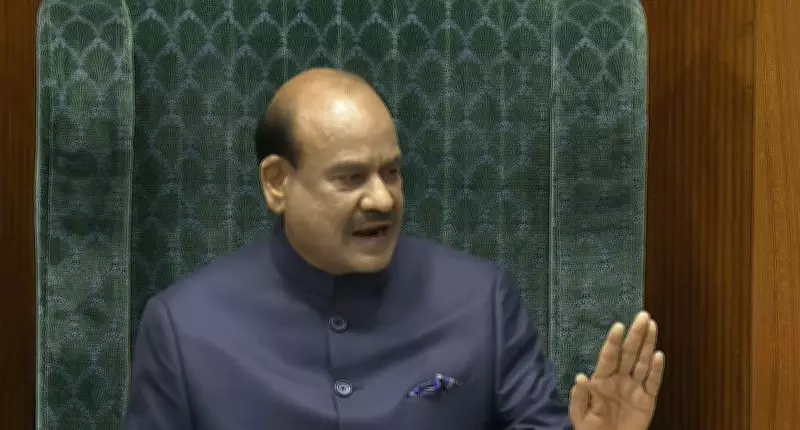
Speaker Om Birla Reaffirms Parliamentary Supremacy
In a firm declaration that underscores the foundational principles of India's legislative framework, Lok Sabha Speaker Om Birla stated unequivocally that no Member of Parliament holds a position above the sanctity of the House itself. This assertion came just one day after the Lok Sabha decisively rejected a no-confidence motion brought against the ruling government, highlighting a pivotal moment in the ongoing parliamentary session.
Context of the Statement
The backdrop to Speaker Birla's remarks is the recent political turbulence, marked by opposition parties filing a no-confidence motion to challenge the government's policies and governance. On the preceding day, this motion was voted down by a majority in the Lok Sabha, following extensive debates that saw heated exchanges between treasury and opposition benches. The rejection effectively solidified the government's position, but it also raised questions about parliamentary conduct and the role of MPs in upholding democratic norms.
Speaker Birla, addressing the House in the aftermath, emphasized that the Parliament is the supreme forum for democratic discourse, and every MP must adhere to its rules and decorum. His statement served as a reminder that while MPs are elected representatives with significant responsibilities, they are ultimately accountable to the institution they serve. This message is particularly resonant in a political climate where partisan clashes sometimes overshadow legislative duties.

Implications for Parliamentary Functioning
The rejection of the no-confidence motion and Speaker Birla's subsequent comments have several implications:
- Reinforcement of Institutional Authority: By asserting that no MP is above the House, Birla reinforced the authority of Parliament as an institution that transcends individual political agendas. This is crucial for maintaining order and ensuring that legislative proceedings are conducted with respect and efficiency.
- Focus on Decorum and Discipline: The statement underscores the importance of parliamentary decorum, especially in light of recent disruptions and protests. It signals a call for MPs to engage in constructive debates rather than obstructive tactics, thereby enhancing the productivity of the House.
- Political Ramifications: For the opposition, the rejection of the no-confidence motion represents a setback in their efforts to hold the government accountable. However, Speaker Birla's emphasis on parliamentary supremacy offers a broader framework for future engagements, potentially encouraging more substantive discussions on policy issues.
Moreover, this episode highlights the delicate balance between political dissent and institutional respect. As the custodian of the Lok Sabha, Speaker Birla's role in navigating this balance is pivotal, ensuring that democratic processes are upheld without compromising on discipline. His remarks are seen as a directive to all MPs, regardless of party affiliation, to prioritize the House's integrity over partisan interests.
Broader Significance in Indian Democracy
In the larger context of Indian democracy, the events surrounding the no-confidence motion and Speaker Birla's statement reflect ongoing dynamics in parliamentary politics. The no-confidence motion, though unsuccessful, provided a platform for the opposition to voice grievances and scrutinize government actions, which is a vital aspect of a healthy democracy.
Speaker Birla's assertion that no MP is above the House aligns with constitutional principles that place Parliament at the heart of governance. It serves as a corrective measure against any tendencies that might undermine legislative proceedings, thereby strengthening democratic institutions. This is especially relevant in an era where political polarization can sometimes lead to institutional erosion.
Looking ahead, the focus will likely shift to how MPs internalize this message and whether it leads to more orderly conduct in future sessions. The government, having weathered the no-confidence challenge, may continue its legislative agenda, while the opposition might seek alternative avenues to hold it accountable, all within the bounds of parliamentary norms.

In conclusion, Speaker Om Birla's statement is a timely reinforcement of parliamentary values, coming on the heels of a significant political event. It underscores that in India's vibrant democracy, the institution of Parliament remains paramount, and every MP must uphold its dignity and authority.





