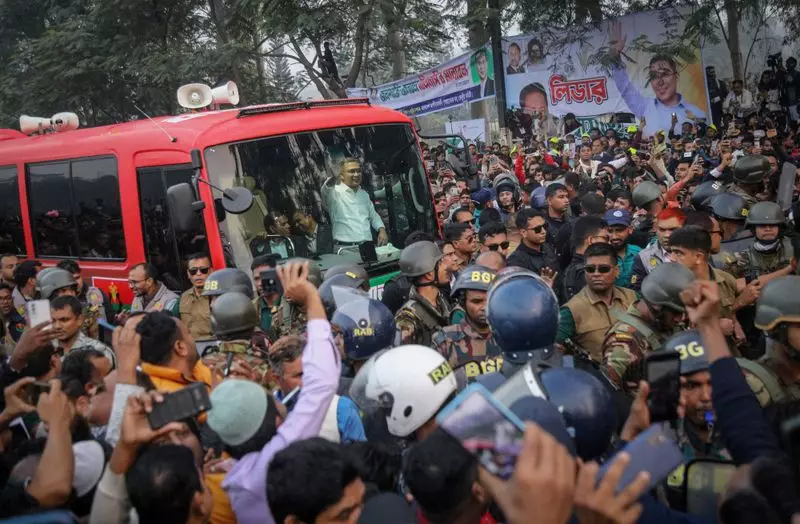
In a deeply emotional and politically significant homecoming, Tarique Rahman, the acting chairman of the Bangladesh Nationalist Party (BNP), returned to his homeland to pay respects at his father's grave, ending a 17-year-long period of forced exile. The visit marks a pivotal moment in Bangladesh's turbulent political landscape.
A Long-Awaited and Emotional Pilgrimage
Tarique Rahman, the eldest son of former Prime Minister Khaleda Zia, traveled to the Banani graveyard in Dhaka on a poignant mission. His destination was the final resting place of his father, former President Ziaur Rahman. This marked his first visit to the grave since he was compelled to leave Bangladesh in 2008, following a military-backed caretaker government's crackdown.
The visit was not just a personal moment of remembrance but a powerful political symbol. Rahman, who has been living in London, leads the BNP in an acting capacity while his mother, the party's chairperson and former Prime Minister Khaleda Zia, remains effectively sidelined due to a controversial conviction and poor health. His return, even if temporary, sends a strong signal to the party's supporters and rivals alike.

The Backdrop of Exile and Legal Battles
Tarique Rahman's departure from Bangladesh 17 years ago was shrouded in controversy and legal turmoil. He left the country after being released on parole following imprisonment during the 2007-2008 caretaker government. Multiple cases were filed against him, ranging from corruption to money laundering.
In a landmark and highly contentious verdict in 2018, a Bangladeshi court sentenced Tarique Rahman to life imprisonment for his alleged involvement in a brutal grenade attack on an Awami League rally in 2004. This attack had targeted the current Prime Minister, Sheikh Hasina, who was then the opposition leader. Rahman has consistently denied all charges, labeling them as politically motivated attempts to cripple the BNP and its leadership.
His conviction and life sentence were delivered in absentia, as he has remained abroad throughout the legal proceedings. The Bangladeshi government has made several attempts to extradite him from the United Kingdom to serve his sentence, but these efforts have so far been unsuccessful.
Political Repercussions and Future Implications
The surprise visit of Tarique Rahman has instantly become the focal point of Bangladeshi politics. For the BNP's loyal base, it is a moment of renewed hope and a show of defiance. It demonstrates Rahman's enduring connection to the country and could potentially galvanize the party cadre ahead of any future political mobilizations.
However, for the ruling Awami League government, the visit presents a complex challenge. It underscores the persistent influence of a convicted opposition leader and could reinvigorate the BNP's narrative of political persecution. The government now faces questions about how to respond to the presence of a fugitive sentenced to life within the country's borders, even if briefly.
The key question now is whether this marks a permanent return or a fleeting pilgrimage. Rahman's ability to stay in Bangladesh would depend on navigating the severe legal hurdles against him. His visit also casts a spotlight on the health and political future of his mother, Khaleda Zia, whose release from prison on conditions has kept her out of active politics.
Analysts suggest this move could be a strategic test of the political waters, an attempt to unify the BNP, or a precursor to a more permanent political maneuver. Regardless of the intent, Tarique Rahman's journey to his father's grave after nearly two decades has undeniably reshuffled the deck in Dhaka's high-stakes political arena, setting the stage for a new chapter of confrontation and uncertainty.