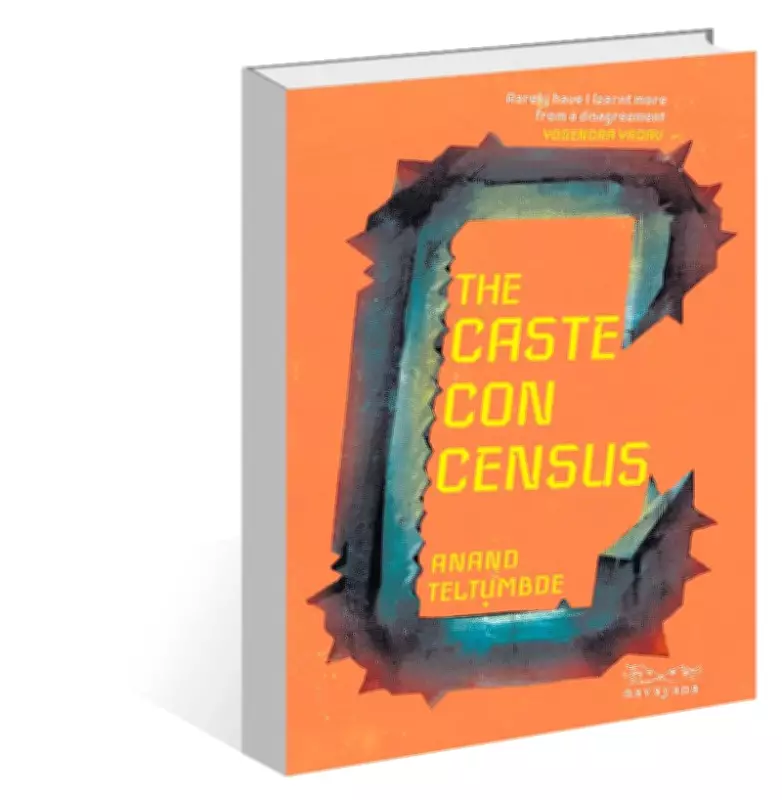
Anand Teltumbde's 'The Caste Con Census' Critiques the Push for Caste Inclusion in India's National Census
In his latest work, 'The Caste Con Census', scholar and activist Anand Teltumbde presents a compelling argument against the inclusion of caste data in India's decennial census. The book delves into the historical, social, and political dimensions of this contentious issue, asserting that such inclusion does not effectively promote social justice and may, in fact, exacerbate existing divisions.
Why Caste Inclusion in Census Falls Short According to Teltumbde
Teltumbde meticulously outlines several key reasons why incorporating caste into the census framework is problematic. He points out that the census, as a tool of the state, often reinforces caste identities rather than dismantling them. By officially recording caste, the government risks legitimizing and perpetuating a hierarchical system that has long been a source of discrimination and inequality.
Furthermore, the book highlights how caste data can be misused for political gains, leading to tokenistic measures rather than substantive policy changes. Teltumbde argues that the focus should shift towards addressing the root causes of caste-based disparities, such as economic inequality and lack of access to education and healthcare, rather than merely counting caste categories.

The Historical Context and Contemporary Implications
'The Caste Con Census' provides a detailed historical analysis, tracing the evolution of caste enumeration in India from colonial times to the present day. Teltumbde explains how past attempts at caste-based data collection have often led to increased social tensions and failed to deliver meaningful benefits for marginalized communities.
In contemporary India, the debate over caste census has gained momentum, with various political groups advocating for its inclusion to better target welfare schemes. However, Teltumbde counters this by suggesting that such an approach oversimplifies complex social issues and diverts attention from more effective strategies for social upliftment.
Alternative Approaches to Social Justice
The book does not merely critique; it also proposes alternative pathways. Teltumbde emphasizes the importance of class-based analysis and universal policies that address poverty and inequality without reinforcing caste identities. He calls for a move beyond identity politics towards a more holistic understanding of social justice that prioritizes economic and educational empowerment for all disadvantaged groups.
By challenging conventional wisdom, 'The Caste Con Census' sparks a crucial conversation about the best methods to achieve equity in a diverse society. It serves as a thought-provoking resource for policymakers, academics, and activists engaged in the ongoing struggle against caste-based discrimination.