

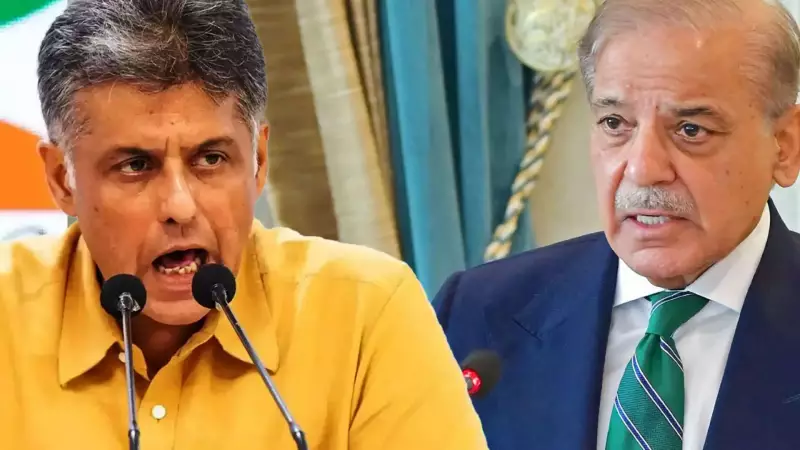
Congress Leader Manish Tewari Calls for Overhaul of India's Neighbourhood Policy
In a significant intervention on India's foreign policy direction, Congress leader and Lok Sabha MP Manish Tewari has raised pointed questions about the effectiveness of the country's "Neighbourhood First" approach. Speaking at an event in Chandigarh, Tewari argued that while New Delhi consistently prioritizes its neighbouring nations, there is alarmingly little evidence of an "India First" attitude in return from these countries.
Imbalance in Diplomatic Relations Demands Serious Introspection
Tewari emphasized that this one-sided dynamic should prompt deep introspection among policymakers and strategic experts. He suggested that India's generous approach might not be yielding proportional benefits for national security and regional influence. The Congress MP stressed that foreign policy must be grounded in pragmatic reciprocity rather than unilateral goodwill gestures.
Pakistan Presents Unique and Persistent Challenge
The veteran politician specifically highlighted Pakistan as a unique challenge in India's neighbourhood calculus. Tewari claimed that Pakistan remains effectively controlled by its military establishment, which continues to fuel cross-border terrorism and regional instability. He expressed skepticism about any fundamental change in Pakistan's behaviour toward India in the foreseeable future.

"Given Pakistan's entrenched institutional dynamics and persistent hostility, India cannot afford to maintain business-as-usual diplomatic approaches," Tewari asserted during his Chandigarh address.
Urgent Need for Strategic Reassessment
The Congress leader urged the Indian government to undertake a comprehensive reassessment of its broader neighbourhood strategy. He advocated for a diplomatic framework review that would ensure better protection of India's national interests while pursuing regional stability. Tewari's critique comes at a time when India faces complex geopolitical challenges across its immediate neighbourhood.
Key elements of Tewari's proposed policy recalibration include:
- Establishing clearer mechanisms for diplomatic reciprocity with neighbouring nations
- Developing more robust safeguards for India's core national interests
- Creating flexible response strategies for different neighbourhood scenarios
- Enhancing regional stability through more balanced engagement approaches
Broader Implications for Regional Diplomacy
Tewari's remarks highlight growing concerns about the strategic returns on India's neighbourhood investments. His call for policy reconsideration suggests that some political observers believe current approaches may require adjustment to address evolving regional realities. The Congress leader's intervention adds to ongoing debates about how India can most effectively navigate its complex relationships with immediate neighbours while advancing its national objectives.
As India continues to play an increasingly significant role in global affairs, Tewari's critique underscores the importance of periodically reviewing foundational foreign policy doctrines to ensure they remain aligned with contemporary challenges and opportunities in the rapidly changing South Asian landscape.






